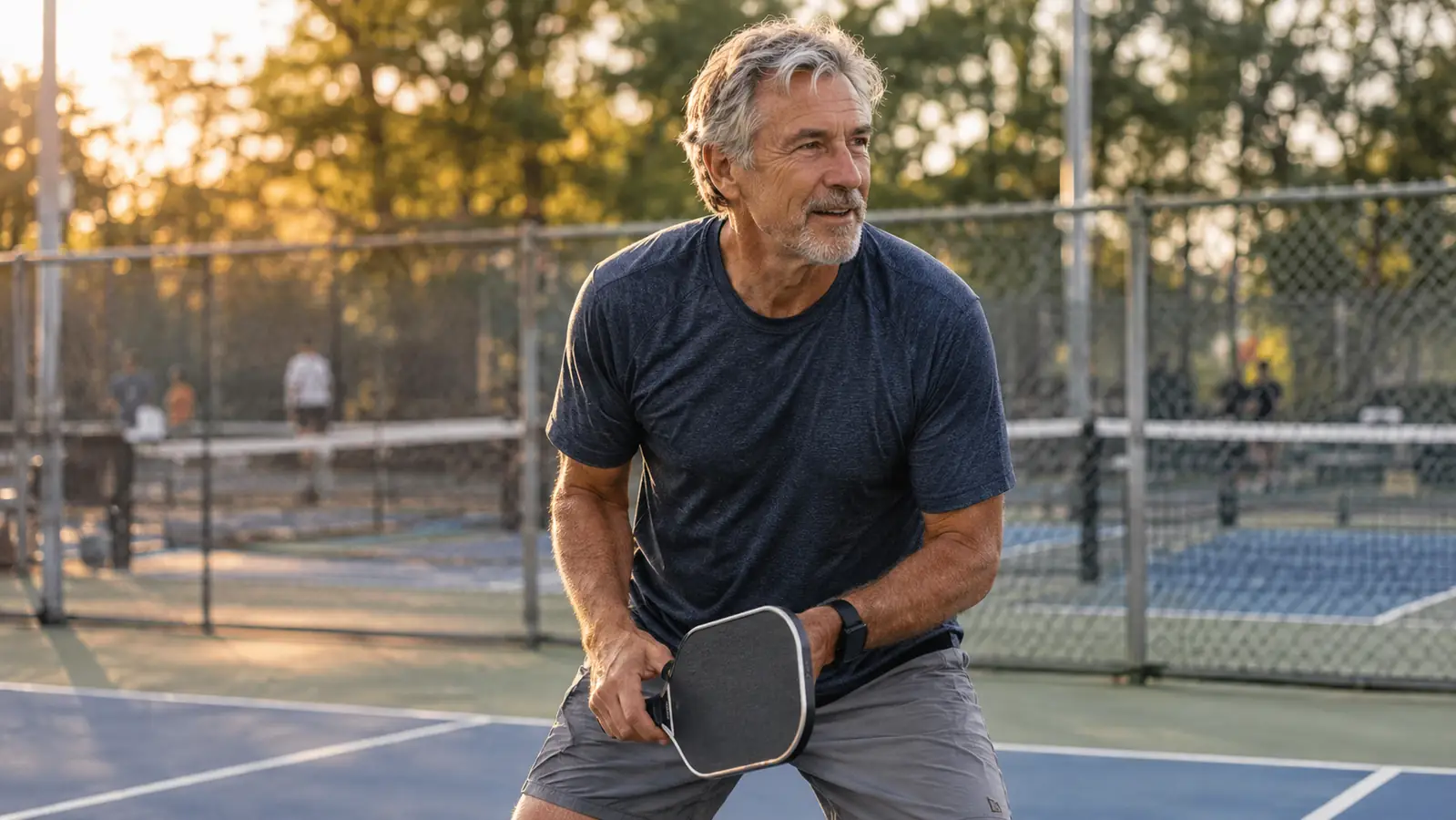
I bought the HEAD Extreme Elite in mid March, during my second week of open play at the city rec center here in Knoxville. I had been playing with a wooden starter set from a big-box store, and that morning I borrowed a paddle out of the loaner bin that buzzed so hard on a mishit my right hand felt it for the rest of the session. Phil, my neighbor, watched me shake it out and told me it was time to get a real paddle. The HEAD was the one I picked. It sat in the middle of the wall at the shop, between the starter sets and the carbon paddles with pro names stamped on them, and it looked like a paddle I could grow into without guessing.
That was my first real paddle and it is still in my bag. It is not the one I play with now. I moved to a thicker carbon paddle for control at the kitchen line, and I will say that plainly because it is true. But the HEAD stayed, and it does a job nothing else in my bag does. It gets handed to newcomers, it rides in the car, and it comes out when my main paddle is having a bad day. Here are ten reasons it earned that spot, written for anybody standing in that same shop aisle wondering whether a fiberglass paddle is a waste of a morning.
The paddle I still hand to every newcomer at open play
Fiberglass face, polypropylene honeycomb core, about 7.8 ounces, 4 1/4 inch grip. If you are past the wooden starter set but not ready to fight a carbon paddle, start here.
Amazon Check Today's Price on Amazon →Fiberglass forgives the shots you barely reach
Fiberglass is the middle ground between a wood starter face and the carbon faces the strong players use. It has some give to it. A stiff face sends everything back flat and fast, which is fine if you know where you are aiming. I did not. On low balls I had to dig out of my shoelaces, the wooden paddle sent them into the net. The fiberglass face put a little loft under them and they cleared. At my level, clearing the net is the whole job. I am not saying fiberglass beats carbon. I am saying it is kinder to a player who is still learning where the ball is going.
The honeycomb core keeps the buzz out of your hand
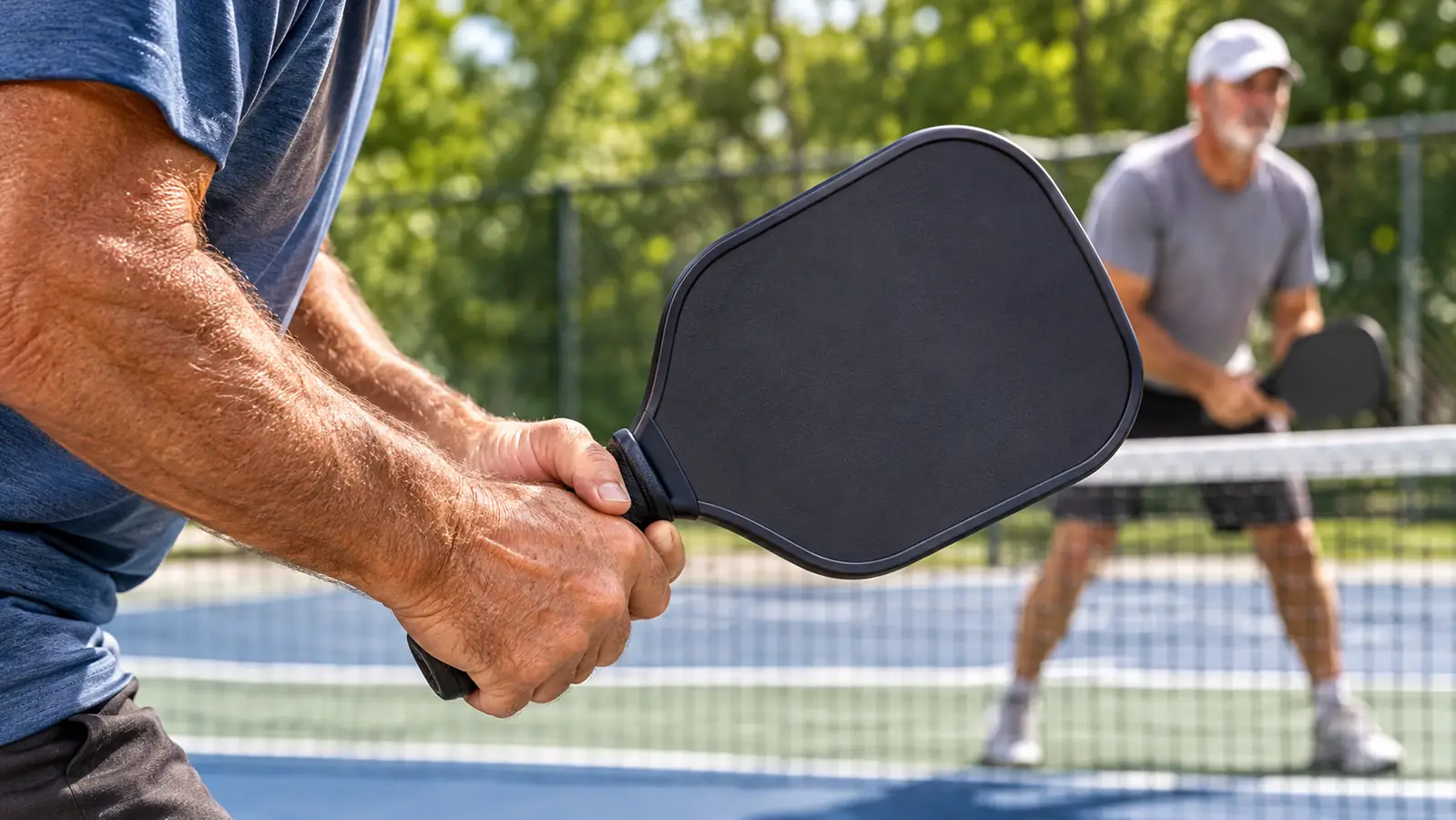
The core is polypropylene honeycomb and I will not pretend I can feel a honeycomb. What I can tell you is what my right hand felt like after three games. My elbow has been sore since my years on the UPS truck, so I notice things. The wooden paddle left a dull ache by the third game every morning. The HEAD did not. HEAD's listing calls it minimal vibration, and that matched what I felt. Less ringing on mishits. Quieter in the hand. It did not fix my elbow and I would not tell anybody it will fix theirs. It just stopped adding to the problem, which is all I wanted.
At 7.8 ounces it does not wear you out by the third game
HEAD lists it at 220 grams, about 7.8 ounces. That is light enough that I play Monday, Wednesday and Friday mornings without my shoulder filing a complaint. It is also light enough that I handed it to a woman in her seventies who had never played and she was rallying inside of ten minutes. Watch somebody fight an overweight paddle for an hour and you will understand why that matters. Light also means quick. I am not fast at the kitchen line. The paddle does not make me slower, and on a ball hit at my feet that half second is the difference between a dink and an apology.
11 mm of thickness gives you pop while you learn to build a point
Eleven millimeters is on the thinner side. Thin usually means more pop and less control, and that is the honest trade with this paddle. If you came over from tennis and you like to drive the ball, you will like it. If your game is already all dinks and you want the ball to die off the face, you will not. I moved to a thicker paddle for exactly that reason once my soft game finally showed up. For the first few months, though, the pop helped. It gave me a way to end a point before I knew how to construct one.
A 4 1/4 inch grip that fits a normal hand
The grip is 4 1/4 inches. Mine is a normal hand and it fit without me adding tape or taking tape off. HEAD calls it the Ergo Grip and the shape sits in the fingers without me thinking about it. The thing I actually noticed was that I stopped strangling it. With the wooden paddle I held on tight enough to make my forearm tired by the second game. A grip that fits lets you hold it loose, and holding it loose is most of the battle for a guy my age. That is worth more than anything printed on a spec sheet.
A 16 by 7 7/8 face gives you room for edge hits
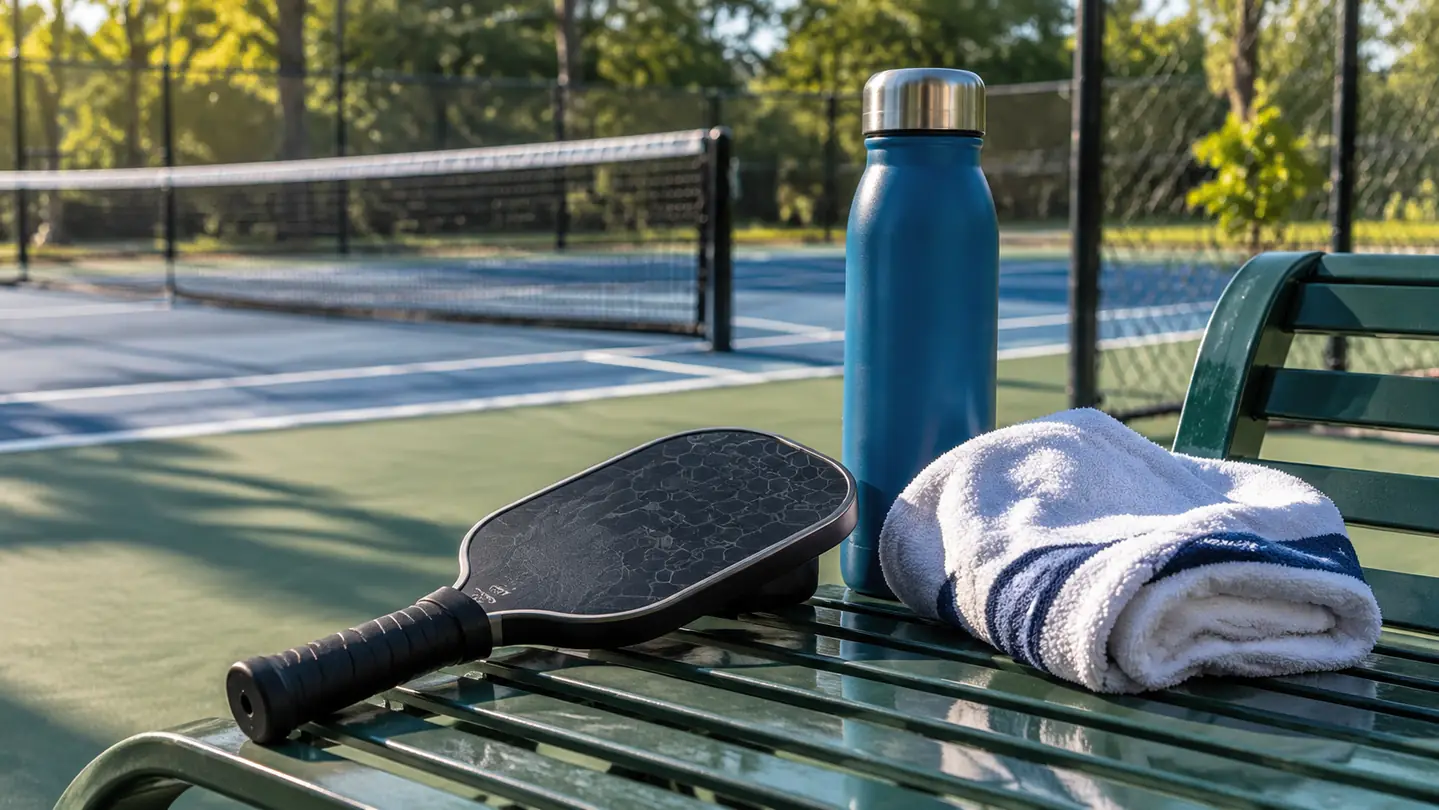
Most of my misses with the starter paddle were edge hits, and an edge hit on a small face goes into the net or off the frame entirely. Sixteen inches long and 7 7/8 wide gave me enough margin that a ball struck a half inch off center still got over. It is not a wide-body paddle, so it does not feel strange in the hand. If you have been playing a while it will feel like a normal paddle. If you are brand new it will feel forgiving without feeling like a cheat. That balance is why I would hand it to a beginner before I handed them anything else.
The graphite frame holds up to a rec center life
The frame is graphite. Mine has been dropped on asphalt, shoved in a bag next to a water bottle, and handed to strangers who grip it like a hammer. That is the test that matters for a paddle at this level, not how it feels on day one. The edge guard is scuffed. The face has a worn patch where I scrape it going after low balls. Nothing has cracked, delaminated or gone soft on me. If you are going to drag a paddle to a park three mornings a week and leave it in the car, this is the line you should care about most.
You can hand it to a stranger and they can play
Because it is my backup, it lives in the bag and it gets lent out. I have handed it to a woman in her sixties who had never held a paddle, a man nursing a bad shoulder, and a teenager who was better than the rest of us put together. All three played with it inside a game. That is the thing about a middle-of-the-road paddle. It does not ask anything of you. Nobody has ever handed it back and told me it was too much paddle to handle, and I cannot say that about the carbon one I play with now.
It is the paddle you can leave in the car
A second paddle that plays like a real paddle is a paddle you can leave in the back of the car. Mine is in the bag in the CR-V right now. If my main paddle cracks at the throat on a Wednesday morning, I finish the session instead of driving home. If somebody shows up at open play without gear, I have something to put in their hand. That is a job the good paddle in my bag cannot do, because I am not lending that one out to a stranger who is going to scrape it on the court. The backup earns its place by being both expendable and good.
A one year manufacturer warranty takes the edge off
HEAD backs it with a one year manufacturer warranty. I have not had to use it and I cannot tell you how the claim process runs. What I can tell you is that knowing it was there changed how I treated the paddle, which is to say I stopped handling it like it was glass. If you are new and you are not sure yet whether you will still be playing in six months, a warranty is a fair thing to lean on. It is not a reason to buy on its own. It is the last line of a list that already had nine good ones.
What I'd Skip
Three things I would not do. I would not buy a carbon paddle as my first real paddle, because you will spend the whole time trying to control it instead of learning the game. I would not buy two of these, since one backup plus your main paddle is already more than you need. And I would not put lead tape or a weighted cap on it, because the whole point of the HEAD is that it is light and easy on the arm, and you would be working against the one thing it does best. One more thing, and I mean this: if your elbow is barking at you, see a doctor before you buy any paddle, and do not expect a paddle to solve it. Mine settled down because I stopped gripping so hard, not because of a spec sheet.
The wooden paddle left a dull ache by the third game. The HEAD did not. It did not fix my elbow. It just stopped adding to the problem.
Start with the paddle that does not punish you for being new
Fiberglass face, polypropylene honeycomb core, 11 mm thick, 4 1/4 inch grip, about 7.8 ounces. The one I still hand to every newcomer at open play.
Amazon Check Today's Price on Amazon →