
If your dinks keep popping up at the kitchen line, your hands are probably not the problem. The paddle is. I know that sounds like something a salesman would say, and I would have rolled my eyes at it too back in March. But I am 59, I play doubles three mornings a week at the city rec center here in Knoxville, and last spring I was losing points I should have won because the ball kept climbing off my paddle face. In early April I bought the Vatic Pro Prism, a carbon fiber paddle with a 16mm core and foam injected walls, and I have used it every session since. Not because it turned me into a different player. Because it made the shots I already knew how to hit come off the way I meant them to.
I am going to tell you what changed, what did not, and who I think should keep their money in their pocket. I am not a pro and I am not going to pretend otherwise. I am a retired UPS driver who spent 31 years lifting packages, which is why my right elbow has opinions about paddle weight and vibration. If you have joint pain of your own, talk to your doctor. A paddle is a piece of sporting goods, not a treatment plan.
The Quick Verdict
The most control I have ever felt under my hand at the net, at a weight my elbow can live with. It is not the paddle for a banger who lives on hard drives from the baseline, and it will not fix your footwork.
Amazon Check Today's Price →The paddle that stopped my dinks from popping up
Carbon fiber face, 16mm core, foam injected walls, 8 ounces. Seven months of Monday, Wednesday, Friday doubles on this one, and it is still my main paddle.
Amazon Check Today's Price on Amazon →How I've Used It
I bought the Prism in early April, a few weeks after I bought my first real paddle, a fiberglass HEAD Extreme Elite that now rides in the bag as a backup and gets lent out to newcomers at open play. My week is Monday, Wednesday and Friday mornings, outdoors when the weather is decent and in the gym when it is not. That works out to somewhere around seventy or eighty sessions on the Prism, plus a few Saturday mornings when Donna comes with me. It has been dropped, wiped down with a towel, rained on once, and knocked against Phil's paddle more times than I can count. It still looks like a paddle.
Most of those sessions were doubles at about my level, which is 3.5 on a good day and closer to 3.25 when my back is tight. I play the right side. My job is to keep the ball in front of me, dink, reset, and not give away the kitchen line. That is the specific job this paddle is built for, and it is the specific job my old paddle was failing at.
I should say up front that I am not going to quote you spin rates or swing weights. I do not own the equipment to measure them honestly, and neither does most of the internet. What I can tell you is what a ball felt like coming off the face, and whether the shot went where I aimed it. That is the whole test.
What the Prism Actually Is
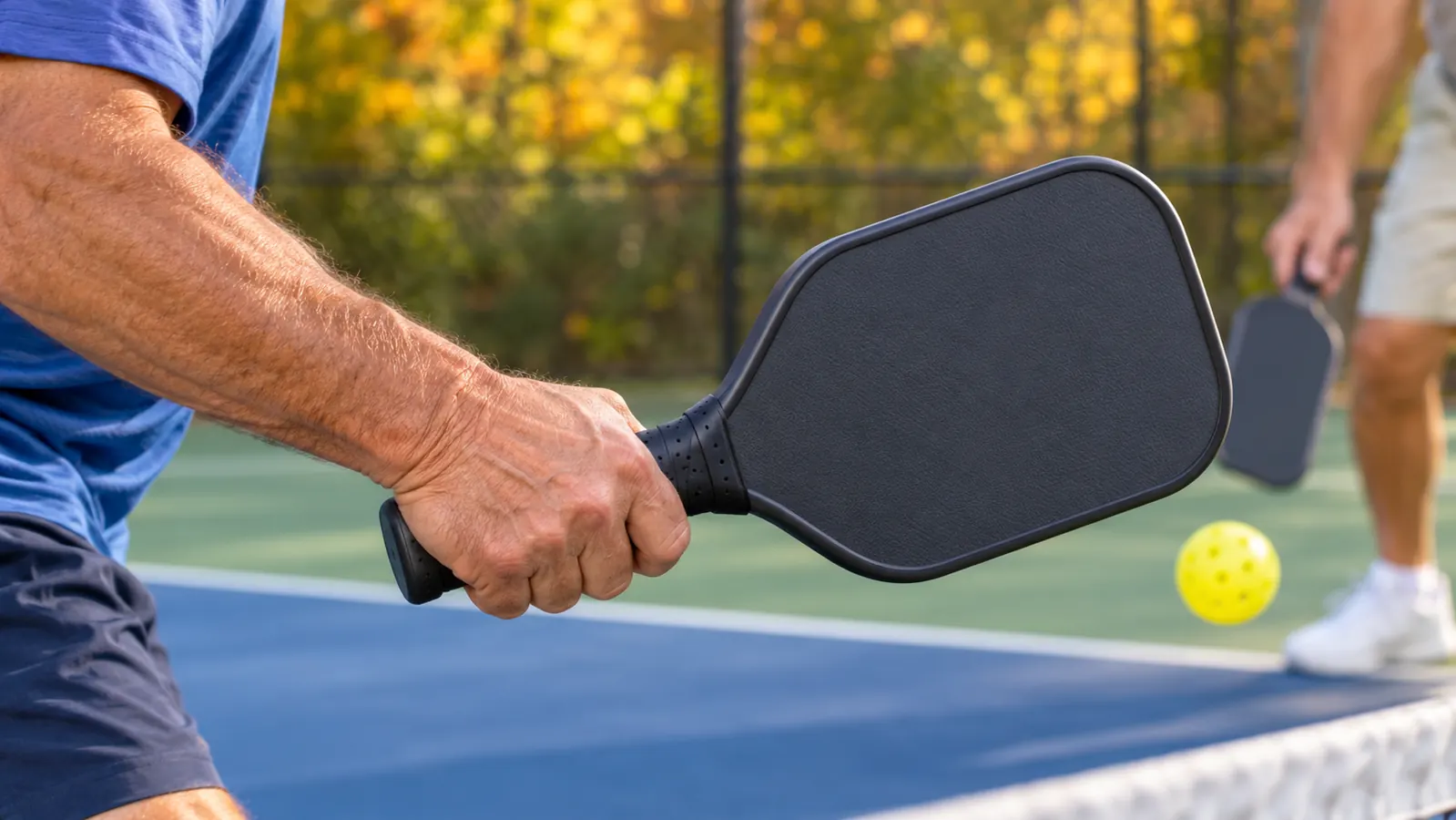
The Vatic Pro Prism is a carbon fiber paddle with a 16mm core and foam injected along the walls. The listed weight is 8 ounces. The face measures 16.3 inches long and 7.5 inches wide, and the listing gives a grip size of 5.3 inches. It ships with a polypropylene sleeve, which is the paddle cover, and it carries a 30 day manufacturer warranty. It is USAPA approved, so it is welcome at sanctioned play and nobody at the rec center squints at it.
The part the manufacturer talks about most is the cold molding process. Vatic Pro says the Prism is built without the intense heat that a lot of carbon paddles use, and that the goal is control and touch rather than raw pop. I cannot verify what happens on a factory floor. I can tell you the result matched the description in my hand, which is more than I can say for most marketing copy I read before I bought it.
You will also see the phrase foam injected walls on the box and in the listing. In plain terms, the edges of the paddle are filled rather than hollow. What I noticed is that the paddle does not ring. There is no hollow ping when the ball hits off center. It thuds. That is the entire benefit as far as I am concerned.
One more thing you will notice in the first session: the sweet spot is generous. On my starter paddle, an inch off center meant a dead, wobbly ball. On the Prism, my misses still go somewhere useful. Part of that is the 16mm core and part of it is the wider cross section the listing describes, which spreads the load instead of letting one corner take the whole hit. Either way, the practical result is that bad contact costs me less than it used to.
What Changed in My Game, and What Didn't
The thing that made me buy this paddle was a Wednesday doubles game in early April. My dinks kept popping up. Not by a lot. By maybe six inches. But at the kitchen line, six inches is the whole game, and Phil put away about four of them in a row while I stood there watching the ball go by at shoulder height. The next morning I went looking for something with more give.
What changed with the Prism is that the ball stays lower. Same stroke, same grip pressure, same slightly panicked footwork. The difference is that a dink I hit a touch too hard does not launch. It sinks. The 16mm core takes some of that extra energy out, and the carbon face grabs the ball enough that it comes off with a little backspin instead of skipping forward. I am not hitting shots I could not hit before. I am hitting the shots I already had, on purpose, more often.
Phil noticed before I did. About two weeks in he stopped mid-rally and asked what I had changed, because the ball was dying at his feet instead of sitting up for him. That is the best compliment a paddle can get from a 66 year old retired man on a Wednesday morning.
What did not change: my serve is still the weakest part of my game. My backhand volley still breaks down when Phil aims at my right hip. I still lose to the two retired schoolteachers who play the left side like they are reading a map. A paddle does not fix footwork, and mine needs plenty of fixing. Anyone who tells you a paddle raised their rating by half a point is selling something, or remembering one good month.
The other honest change is confidence at the net. That is not a technical thing, but it is real. When you trust that a firm dink will not pop up, you stop steering the ball and start hitting it. I am more willing to hold the kitchen line now than I was in March. I think that has won me more points than any single shot I have hit with it.
The Weight and the Elbow Question
I have a sore right elbow. Thirty one years of lifting packages will do that to a man, and it is the reason I care about paddle weight more than most of what gets printed on a paddle. Before this I was playing with a cheap wooden-core starter set from a big-box store, and that thing buzzed in my hand on every off center hit. I wore an elbow strap on most days and still felt it that night.
At 8 ounces the Prism is not the lightest paddle on the shelf, but it feels calmer in my hand than what I came from. Off center hits are noticeably quieter and less jarring, which I credit to the foam in the walls and the thicker core. My elbow feels about the same as it did before I switched. Not better. I want to be careful here, because I am not going to tell you a paddle fixed my elbow, and I am not going to tell you it will fix yours. What I will tell you is that it stopped making the bad days worse. If your elbow hurts, see a doctor first. Then buy a paddle that does not ring.
The tradeoff with 8 ounces and a 16mm core is hand speed. If you win points by flicking your wrist at the kitchen line, this paddle will feel slow at first. It took me about three sessions to stop being late on quick exchanges, and I am still not the fastest hands in the gym. What I lost in reaction speed I got back in control, and at my level control wins more points.
Where It Falls Short
This is not a power paddle. If you played college tennis, or you are one of the guys who lives on hard drives from the baseline, the Prism will feel like it is holding you back. The ball comes off soft. That is the whole point of it, and it is also the reason some people who buy it will hand it to a friend after a month.
The adjustment period is real and it is not fun. My first two sessions I left everything short and lost to a pair I usually beat. If you give up on a paddle after one bad morning, this is not the one for you. Give it three sessions before you decide anything.
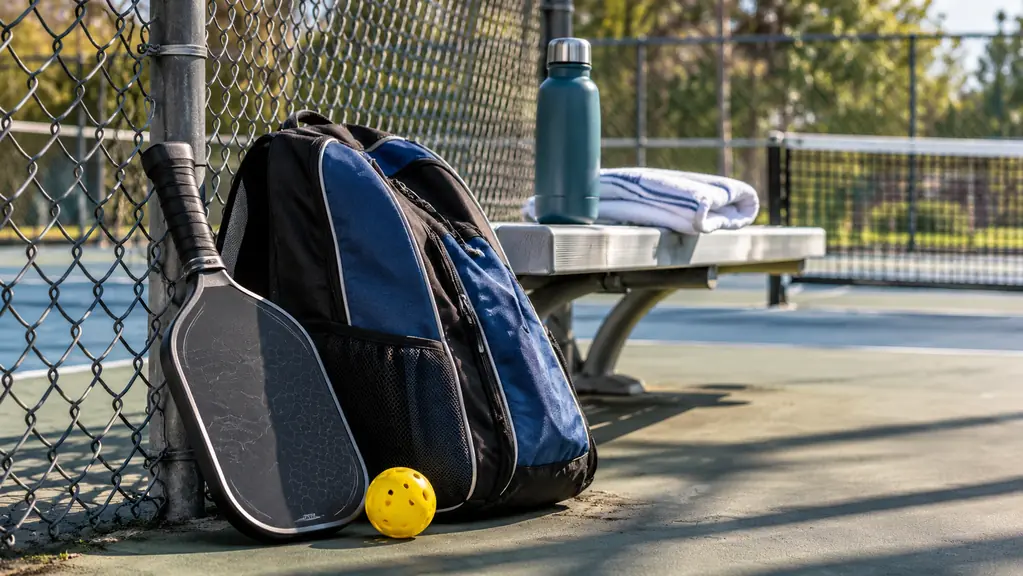
The other complaint is the cover. It is a polypropylene sleeve, thin, no zipper, no pocket. It keeps the face off your other gear and nothing more. I use mine and it lives in the bag, but if you want a case with a wrist strap and a ball pocket, plan to buy one separately.
And the warranty is 30 days. That is short. I have not had to use it and the paddle has held up fine through about seven months of regular play, but you should know going in that the manufacturer is not promising you a year.
What I Liked
- The ball stays low on dinks, even when I hit them a touch firm
- No ring on off center hits, which my elbow noticed
- 8 ounces feels stable in the hand without being heavy
- Built for control and touch rather than pop
- USAPA approved and accepted at sanctioned play
- Has held up through roughly seven months of three mornings a week
Where It Falls Short
- Slow in the hand on fast kitchen line exchanges until you adjust
- Not a power paddle, and it will frustrate hard drivers
- Cover is a thin sleeve with no pocket or strap
- Only a 30 day manufacturer warranty
- Takes about three sessions before it stops feeling foreign
Same stroke, same grip pressure, same slightly panicked footwork. The difference is that the ball sinks instead of launching, and at the kitchen line that is the entire game.
Who This Is For
This paddle is for the doubles player who wins or loses at the kitchen line. If your game is dinks, resets, third shot drops and patience, the Prism was built with you in mind. It rewards a smooth, repeating stroke and it forgives a slightly late one, which is most of us at 3.0 to 4.0 on a Monday morning.
It also suits anyone coming off a cheap starter paddle who wants a real carbon fiber face without jumping into the deep end of the market. That was me in April. The step up from a wooden-core set to the Vatic Pro Prism was bigger than I expected, and it was the first time I could feel a paddle doing something for me rather than against me.
And it fits players with a cranky elbow or shoulder who want a paddle that does not buzz on every off center hit. I am not promising it heals anything. I am telling you it feels calmer, and that was enough reason for me.
Who Should Skip It
Skip it if you are a banger. If your favorite shot is a hard drive from the baseline and your idea of a good rally is four swings and a winner, the Prism will feel like a wet blanket. It takes pace off the ball on purpose. That is a feature for me and a deal breaker for the 4.5 former tennis player two courts over.
Skip it if you are brand new and still learning the rules. You will not feel the difference between this and a decent starter paddle for the first month, and you will not know yet whether you are a control player or a power player. Play a season first, then buy for the game you actually have rather than the one you think you want.
Skip it if you need fast hands above all else, or if you cannot live with a thin sleeve instead of a real cover, or if a 30 day warranty is not enough coverage for you. None of those are deal breakers for me. All of them are honest reasons someone else might pass.
If your dinks are popping up, this is the fix I found
Seven months of rec center doubles on one paddle. Carbon fiber face, 16mm core, foam injected walls, 8 ounces, USAPA approved, sleeve included. Give it three sessions before you make up your mind.
Amazon Check Today's Price on Amazon →