I bought a three-pack of Franklin Sports X-40 outdoor pickleballs in late March for one reason. Our rec center keeps a sleeve of balls in a plastic bin by the gate, and one Tuesday morning a ball split along the seam in the middle of a rally. Not on a hard drive. It just came apart. We stopped playing, went through six bags looking for a spare, and the only one anybody had was so soft it barely came up off the bounce. Phil looked at me and said we are better than this. He was right.
So I ordered the Franklin Sports X-40 and I have kept three in my bag ever since. I play three mornings a week at the city rec center here in Knoxville, outdoors from spring through fall, and indoors in the gym when it rains or turns cold, though indoors the facility supplies its own balls. I have gone through several packs of the X-40 in that time. Some cracked. Some went soft and quit coming off the court the way they should. I have opinions about both, and I will get to them.
The Quick Verdict
The outdoor ball I stopped thinking about. Consistent flight, hard to lose track of, and it holds up through a morning of doubles. It does crack faster once the weather turns cold, and it is not a magic ball for anybody's game.
Amazon Check Today's Price →The three balls that ended the mid-rally search for a spare
This is the ball our courts settled on, and the one I keep three of in the bag so a rally never ends because somebody's shell split. USA Pickleball approved, 40 drilled holes, one-piece molded.
Amazon Check Today's Price on Amazon →How I've Used It
My routine has not changed much since I started playing in the spring of 2024. Monday, Wednesday and Friday, open play, doubles, and I play the right side. I am 59. I drove a UPS route for 31 years and retired in 2023, and my right elbow reminds me of those years most mornings. None of that has much to do with which ball is in my hand, but it has everything to do with how I shop for gear. I want the boring thing that works, and I want to buy it once.
Before the X-40 I did what most people do, which is play with whatever is in the bin and not think about it. When the bin got thin last spring, I bought a cheap sleeve at a sporting goods store on my way home, and those were worse than the free ones. They went soft inside of two weeks, and one of them was out of round from the first bounce, so it wobbled and I spent a whole morning apologizing for it every time it was my turn to serve. That is when I stopped buying balls on the way home and started buying them the way I buy work boots, which is once, and carefully.
The Franklin Sports X-40 is the boring thing that works. I keep a three-pack in the bag and I rotate through them. When one starts to feel flat, or I see a hairline crack in the shell, it goes in the trash and the spare comes out. That is the whole system. I have not stopped a game to hunt for a ball since, which sounds like a small thing until you have stood on a court with five other people waiting on you to find one.
Worth saying up front: a ball is not a paddle. Nobody's game gets rebuilt by a ball, and I am suspicious of anybody who says otherwise. What a good outdoor ball does is get out of the way. It bounces the same on the first point of the morning as it does an hour later, it does not skid sideways on a routine dink, and it does not surprise you. That is the whole bar. The X-40 clears it.
What the X-40 Actually Is
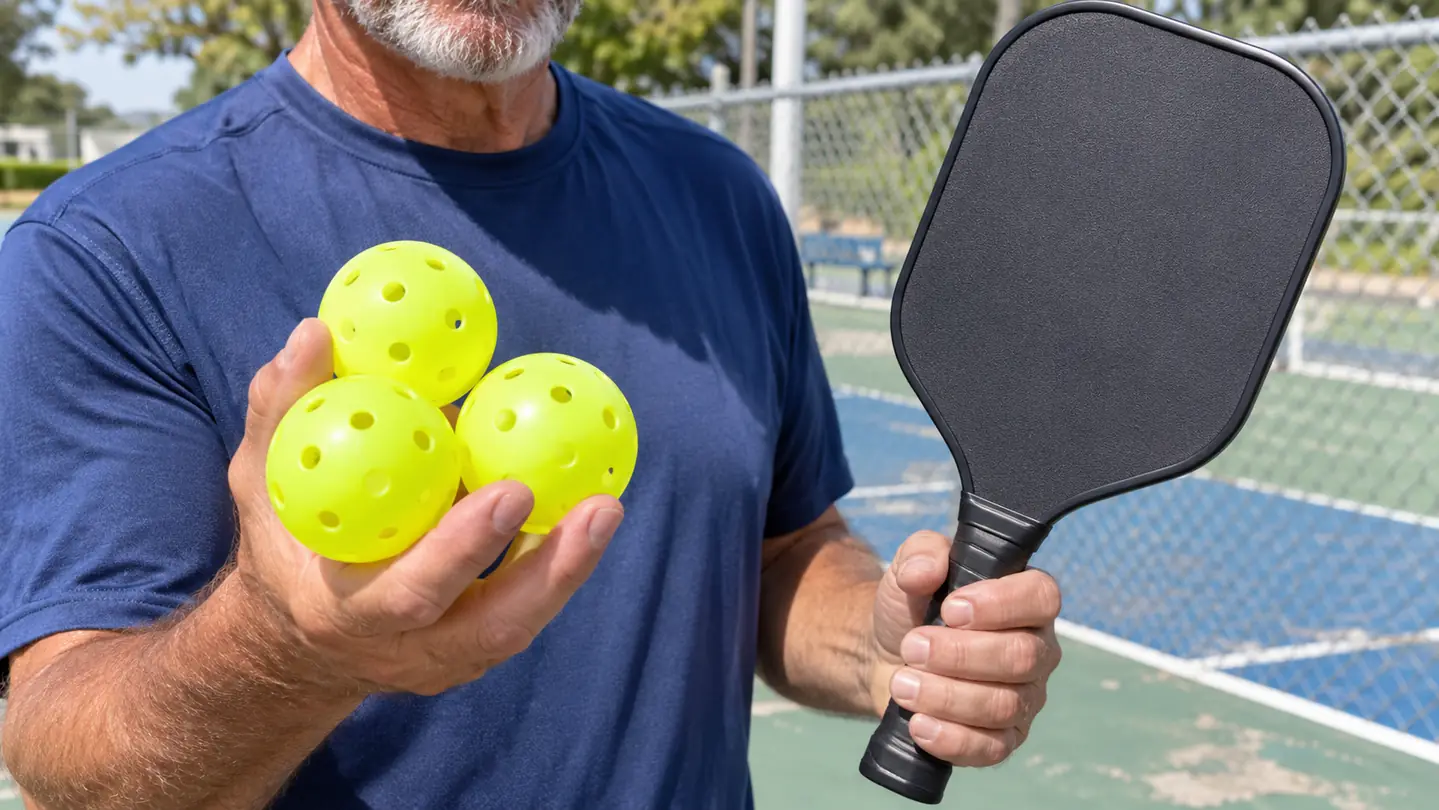
It is a molded plastic outdoor ball, 2.91 inches across, with 40 machine-drilled holes. That is the entire object, and I like that about it. The holes are drilled rather than punched, and the ball is rotationally molded in one piece out of polyethylene, which matters more than it sounds. A ball with a seam is a ball that can come apart at the seam. I watched that happen with the rec center's old stock. I have cracked a few X-40s in cold weather, and I will get to that, but I have not had one split open on a rally.
The other thing, and this is the reason our courts ended up with them, is that the X-40 is USA Pickleball approved. It is also the ball used at the US Open Pickleball Championships and on the APP Tour. I am not going to pretend any of that fixes your third shot drop. What it means in practice is that when our rec center had to restock balls in bulk this summer, the argument was already settled. Nobody had to stand up in a meeting and defend the choice, and anybody who has sat through a rec center meeting knows that is the real value.
They come in bright, high-contrast colors, so pick whatever your eyes track best. What I care about is that I can see it against a dark court surface and against the fence line, which matters more at 8 in the morning when the sun is low and coming in sideways across the far baseline.
Forty drilled holes, molded in one piece, and USA Pickleball approved. None of that is exciting. All of it is why I stopped thinking about which ball is in my hand.
How It Plays in a Real Game
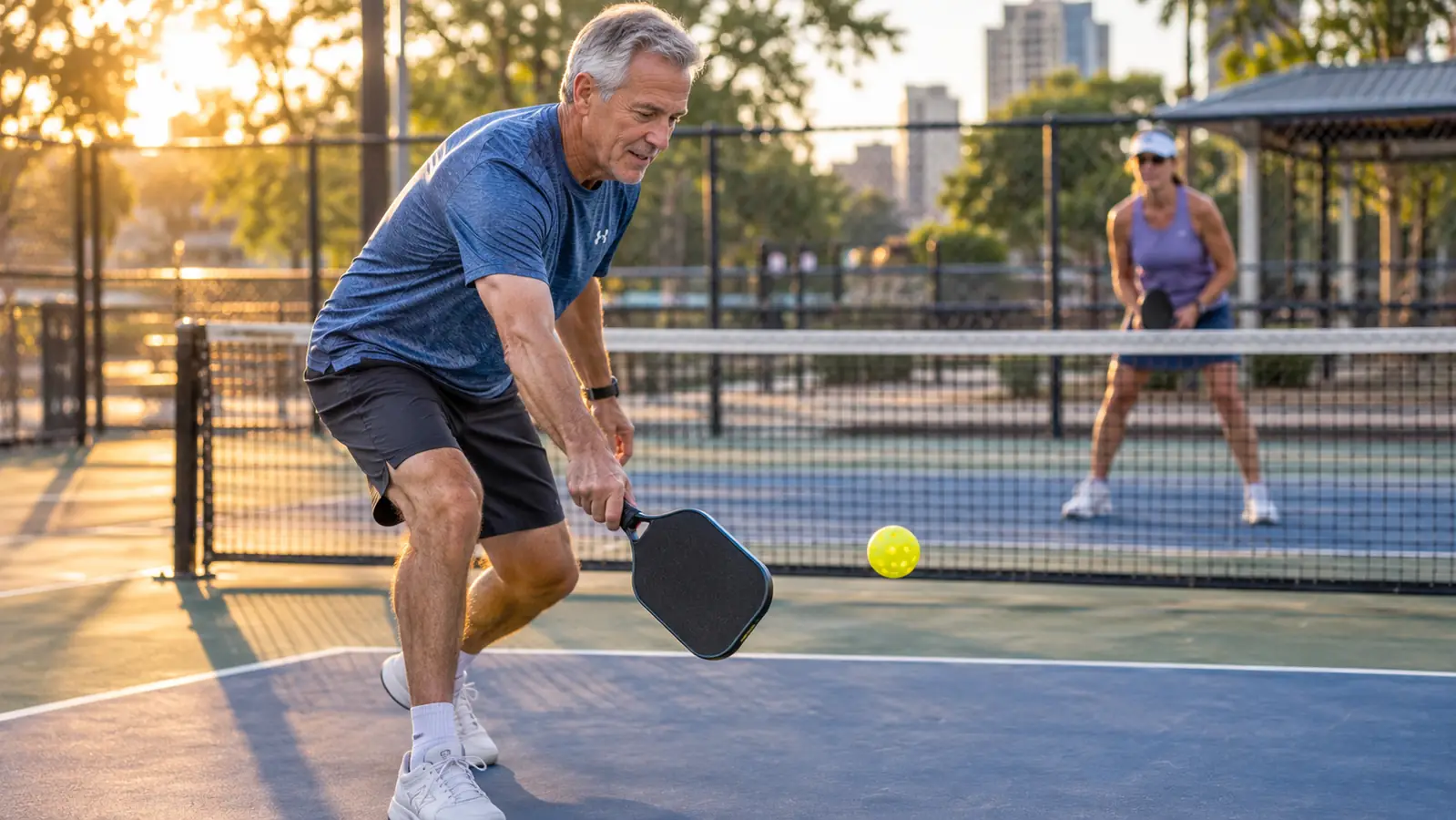
Off the paddle, the X-40 feels firm and a little hard, the way an outdoor ball should. It comes off the face predictably on a drive and it does not balloon on you. The 40 holes are drilled in a pattern meant to keep the flight path balanced and hold spin consistently, and I can tell you from the receiving end of Phil's serve that it does hold a line. He hits a low, cutting serve that used to wander with the soft balls we were using. With the X-40 it stays low and it stays where he aimed it, which is annoying and also the point.
Here is a specific one. Second Wednesday in April, Phil and I got matched against two fellows who both played college tennis and both hit harder than anybody else at open play. I figured we would get run off the court in fifteen minutes. What happened instead is the ball kept coming back. Their drives came off the X-40 flat and fast, and my paddle was where it needed to be because the ball did not wobble on the way in. We lost both games, and I walked off not embarrassed, which against that pair is a result for me.
At the kitchen line it behaves. Dinks sit down and stay down. That sounds like faint praise, but if you have played with a ball that is a little too lively, you know the difference between a dink that dies in the kitchen and one that pops up at chest height for your opponent to put away. I lost a lot of points that way before I switched, and I lost them for a lot of reasons, but the ball was one of them.
In wind, I would call it average. It is a hard plastic ball with 40 holes and it is going to move. What I have noticed is that it moves the same way every time, so you can adjust. A ball that reacts unpredictably is much worse than a ball that reacts a lot. And on the serve, the firmness is a genuine help for anybody who does not swing hard. The ball does more of the work than a soft one does.
How It Holds Up, and When It Doesn't
Here is the honest part. These balls crack. Not right away, and not on any schedule I can give you, but they do crack, and I have thrown out more than one with a split near the seam. What I will say is that when it goes, it usually goes gradually. You notice a ball sounds a little duller off the paddle before it actually fails. That has given me time to swap it out between games rather than in the middle of one.
Cold weather speeds it up. The first genuinely cold morning was a Monday in early November, 43 degrees when I pulled into the lot with the heater still running. I opened a fresh three-pack that morning and by the third game two of them had hairline cracks near the seam and one was already sounding dead off the paddle. The summer pack still in my bag played fine, so I do not think it was a bad batch. Plastic gets brittle when it is cold. Franklin Sports lists a 90 day limited warranty, which is fair for something that takes this kind of abuse, and I have never bothered to claim it. Losing a ball to the weather is not a warranty problem, it is the cost of playing outside in Tennessee in November. If you play outdoors into the forties, budget for it and keep spares in the bag.
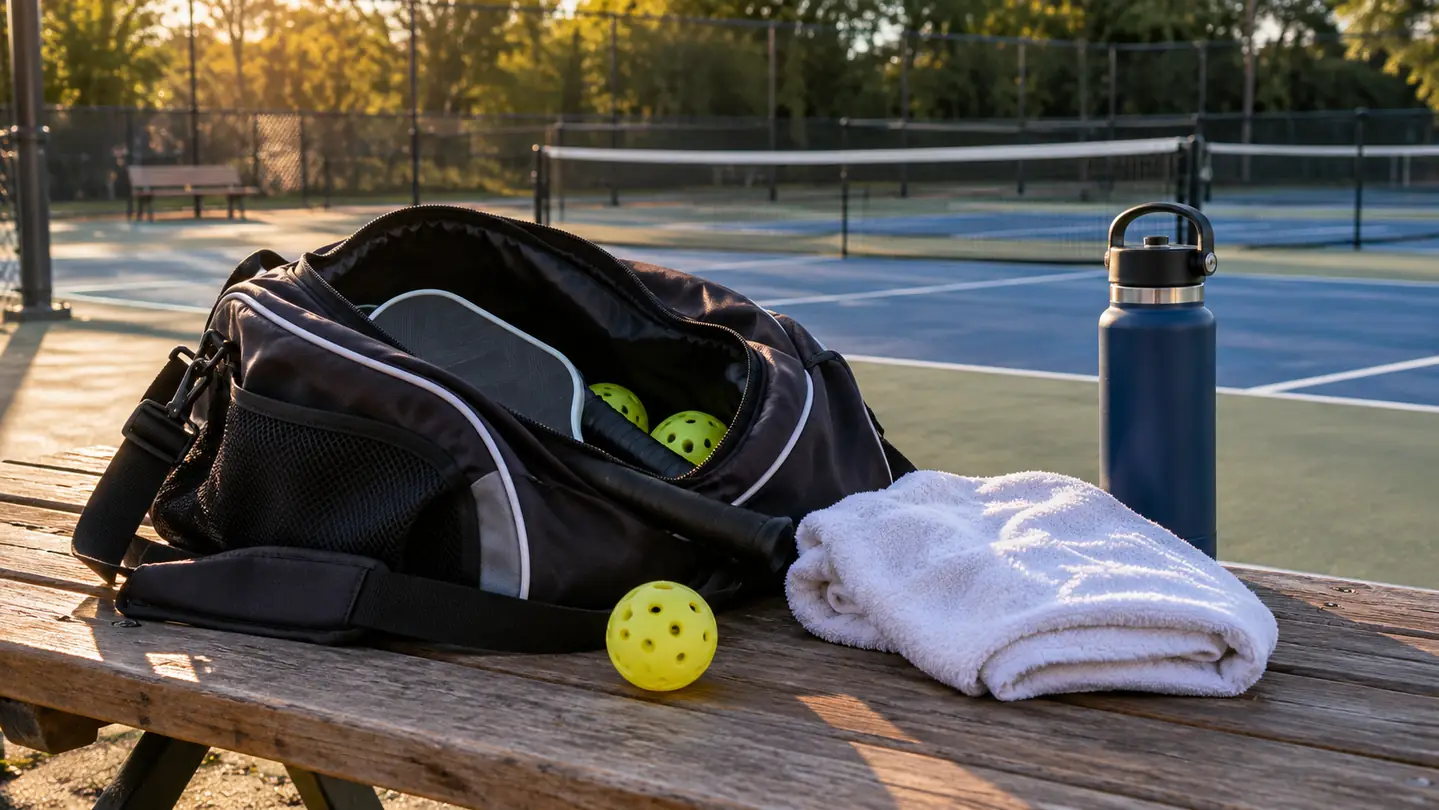
I also stopped leaving them in the CR-V. A ball that has sat in a hot car all week comes out feeling different, and I had one go soft on me in a way that I am fairly sure was heat and not hours of play. Now the bag comes inside with me.
The other way they go is soft. A ball quits coming off the court with that crisp sound, the bounce gets sluggish, and your dinks start dying short of the net for no reason you can identify. That is a ball that needs to be retired. I rotate mine so no single ball takes every session, and that has stretched a three-pack further than I expected. I keep a fat permanent marker in the bag and put a dot on the newest three when I open a pack, so I know which ones are oldest. Small habit. It has saved me from finishing a morning with three soft balls and no idea which one is which.
One more thing that is not a defect but is a real cost: they leave. A ball hit into the weeds behind the far court on a windy morning is gone, and I have contributed to that pile more than once. The bright colors help, and I still look for a minute before I give up. If your courts have no fence and a lot of brush, plan on losing a couple over a season.
What I Liked
- Consistent flight and bounce from the first point of the morning to the last
- 40 drilled holes in a one-piece rotational-molded shell that holds spin and does not split at a seam
- USA Pickleball approved and used at the US Open Pickleball Championships and on the APP Tour
- Bright, high-contrast colors make it easy to track against a dark court and a fence line
- Firm off the paddle, so players who do not swing hard still get a ball that travels
Where It Falls Short
- Cracks faster in cold weather, and I have lost two in a single cold session
- Goes soft over time and has to be retired before it fails outright
- Outdoor use only, so it is the wrong ball for the gym
- Easy to lose in brush or weeds behind an open court
- A three-pack does not last a full season for a three-mornings-a-week player
Who This Is For
This is for the rec player who shows up three mornings a week and wants the ball question settled. If you play outdoors at a park or a rec center, if your group is tired of pulling a soft, worn ball out of the bin and pretending it is fine, and if you would rather spend your attention on your footwork than on which ball is in play, this is the ball. It is also the right pick if you are the person who ends up supplying balls for open play, because it is the one nobody argues about. I lend paddles to newcomers and I hand them an X-40 without a second thought.
If you are new to the game, this is a fine first ball to own as well, and I say that as the fellow who hands a stranger a paddle and a ball most Fridays. Soft, worn balls teach bad habits, because you learn to swing harder than you need to just to get the ball to the back line. A ball that comes off the court properly lets you find out what an easy swing actually feels like. That alone is worth a three-pack.
If your elbow or your shoulder is talking to you, that is a conversation for your doctor, not for a ball review. I say that as a man with a sore right elbow who has tried to solve it with gear. Gear helps around the edges. It does not fix a joint.
Who Should Skip It
Skip it if you play indoors. The gym here uses its own indoor balls and the X-40 is an outdoor ball, so buying these for indoor play is spending money on the wrong tool. Skip it if you want the softest, liveliest ball on the market, because this is not that ball and it is not trying to be. And skip it if you are expecting a ball to change your results. It will not raise your rating and it will not fix a bad third shot. What it will do is show up the same way every single time, which is worth more than people give it credit for, but it is not the same thing as getting better.
If you play once a month, one three-pack will last you a long while and you should not overthink it. If you play like I do, buy two packs, keep them out of the car, and rotate them.
The ball our courts stopped arguing about
USA Pickleball approved, 40 drilled holes, one-piece molded shell. I keep a three-pack in the bag and a spare within reach, because a cracked ball should never be the reason a good morning ends early.
Amazon Check Today's Price on Amazon →