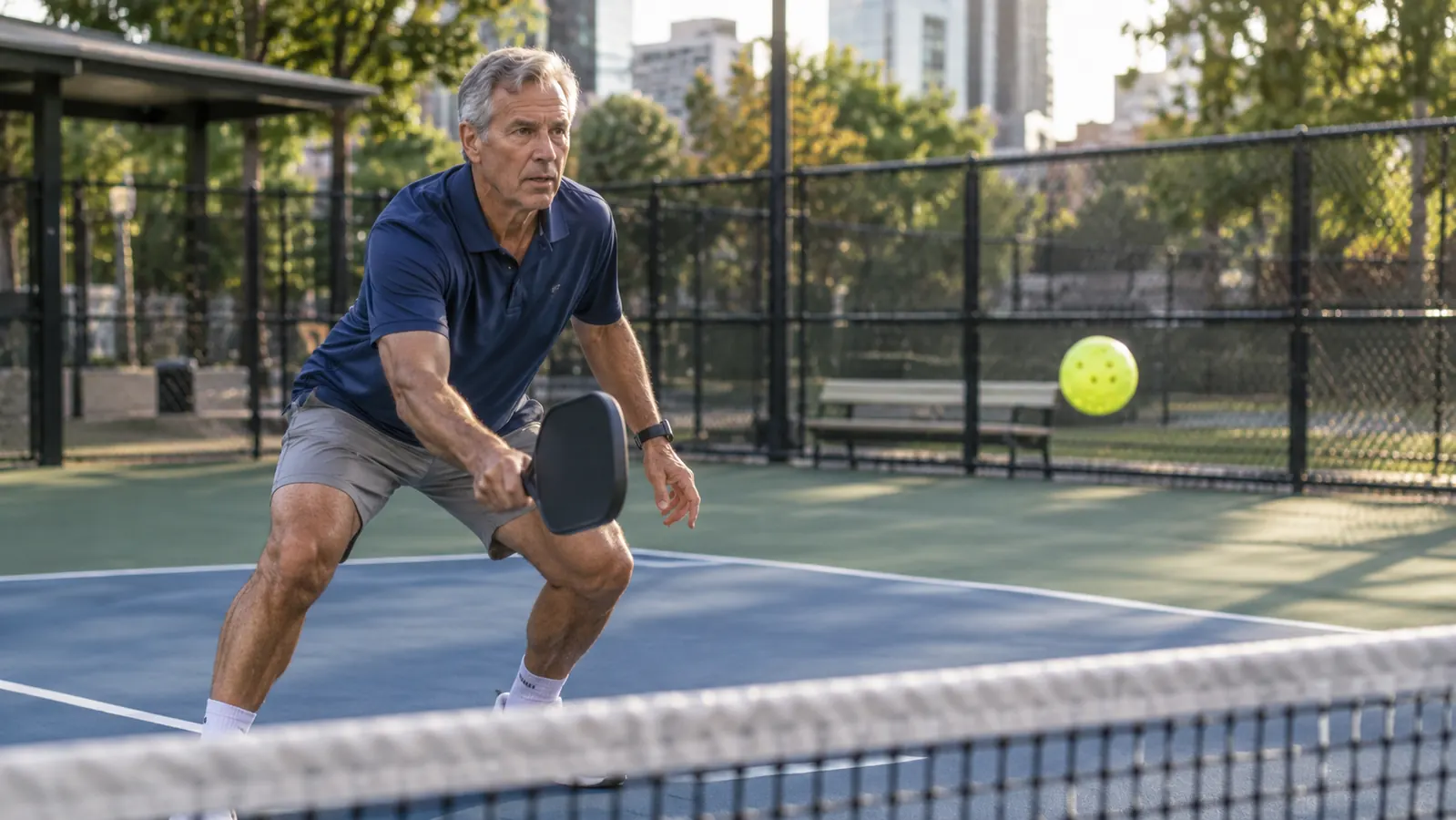
Short answer: for ordinary rec play at a park or a city rec center, I would put the Franklin Sports X-40 in your bag. It flies straight, it stays visible against a sun-faded court, and it does not punish your hand when you catch one thin. The Dura Fast 40 is a real ball too, no knockoff of anything. It just suits a different kind of morning. If your group hits hard and plays in heat that makes the court shimmer, the Dura is the better pick, and I will say exactly why further down.
I am 59, retired off a UPS route after 31 years, and I play doubles three mornings a week on the outdoor courts at the city rec center here in Knoxville. I bought a 3-pack of Franklin Sports X-40s in late March after a morning when the worn house ball cracked mid-rally and nobody had a spare. That little crunch, the ball going flat in the middle of a point, is what sent me shopping. Since then I have played with both of these balls enough times to know which one I reach for, and I will tell you now that it is not the same answer every single week.
| Franklin Sports X-40 | Dura Fast 40 | |
|---|---|---|
| Approval | USA Pickleball approved | USA Pickleball approved |
| Holes | 40 machine-drilled holes | 40 holes |
| Size | 2.91 inches across | Standard outdoor tournament size |
| Pace off the paddle | Balanced, a mix of pace and control, sits down on dinks | Faster and firmer, carries through the court |
| Feel on a mishit | Forgiving, less sting on a sore hand | Hard feedback, you feel every thin contact |
| Life span in cold or heat | Cracks sooner once the temperature drops | Stays round longer, especially in hot dry weather |
| Tracking the ball | Range of bright, high-contrast colors | Traditional tournament look |
| Best fit | Rec doubles, mixed levels, control players | Fast groups, hard hitters, hot climates |
Where They Are the Same
Both are USA Pickleball approved. Both have 40 holes. Both are hard plastic outdoor balls built for play on asphalt and concrete, and neither one is going to move you up a level or fix a dink that keeps popping up. If you are hoping a ball will do that, save your money and take a lesson. I say that as a man who has taken exactly one lesson and needed about four more.
Both also sound like a woodpecker on a hollow gym floor. That is outdoor pickleball, and the neighbors will hear you either way. If quiet matters more than anything else, you want an indoor ball and you should be playing indoors.
Where the Franklin Sports X-40 Wins
The first thing you notice is the flight. The X-40 has 40 machine-drilled holes, and it comes off the paddle with a mix of pace and control that keeps a dink from jumping up on you. I play the right side and my whole game is keeping the ball low and moving it around. With the X-40, a soft reset off the kitchen line stays down more often than it does not. Not every time. I am a 3.5 on a good day and I still pop up more balls than I would like. But the ball is not working against me, and over a two-hour session that adds up.
The second thing is my hand. I have a sore right elbow from years of lifting packages, and a hard ball on a cool morning lets me know about it. The X-40 is not a soft ball, but it is forgiving enough that a mishit off the edge does not send a jolt all the way up my arm. I wear a basic elbow strap some days. I am not going to sit here and tell you a ball fixed anything, because it did not. I am telling you the X-40 is easier on me than the harder balls I have tried, and that is most of the reason it stays in the bag.
Third, you can see it. The X-40 comes in a range of bright, high-contrast colors, which matters more than people admit once the court is bleached out and the net is throwing shadows. Tracking the ball from the baseline to the kitchen line is half of playing at this level. I have lost balls in the air against a light background and it makes you tentative, and a tentative player at the kitchen line is a losing player. Franklin Sports molds it as a one-piece polyethylene ball, 2.91 inches across, and it feels like one solid piece in your hand rather than something assembled.
Where the Dura Fast 40 Wins
The Dura Fast 40 is faster. That is the trade you are making. Off the paddle it is firmer and it carries, and if you have a serve worth anything, the ball rewards you for it. The guys at my rec center who came over from tennis and still hit through the ball love it for exactly that reason. It gets to the other end of the court quicker and stays low through the middle, which means shorter points and more action per hour.
It also holds up, and I will hand it that win without arguing. My X-40s crack faster once the temperature drops, which is a real cost when you are buying packs through a long season. The Dura keeps its round longer, especially in hot, dry weather, and a ball that stays round plays the same in game six as it did in game one. If you live somewhere the summer sits over 95 degrees for weeks, that matters more than the feel of the thing.
One more honest note. A faster ball makes a strong player look stronger and a shaky player look shakier. If you are the best player in your group, the Dura gives you a weapon. If you are the newest player in your group, it will find you out in about four points. Same ball, different verdict, depending on whose hand is on the paddle.
The ball I keep three of in the bag
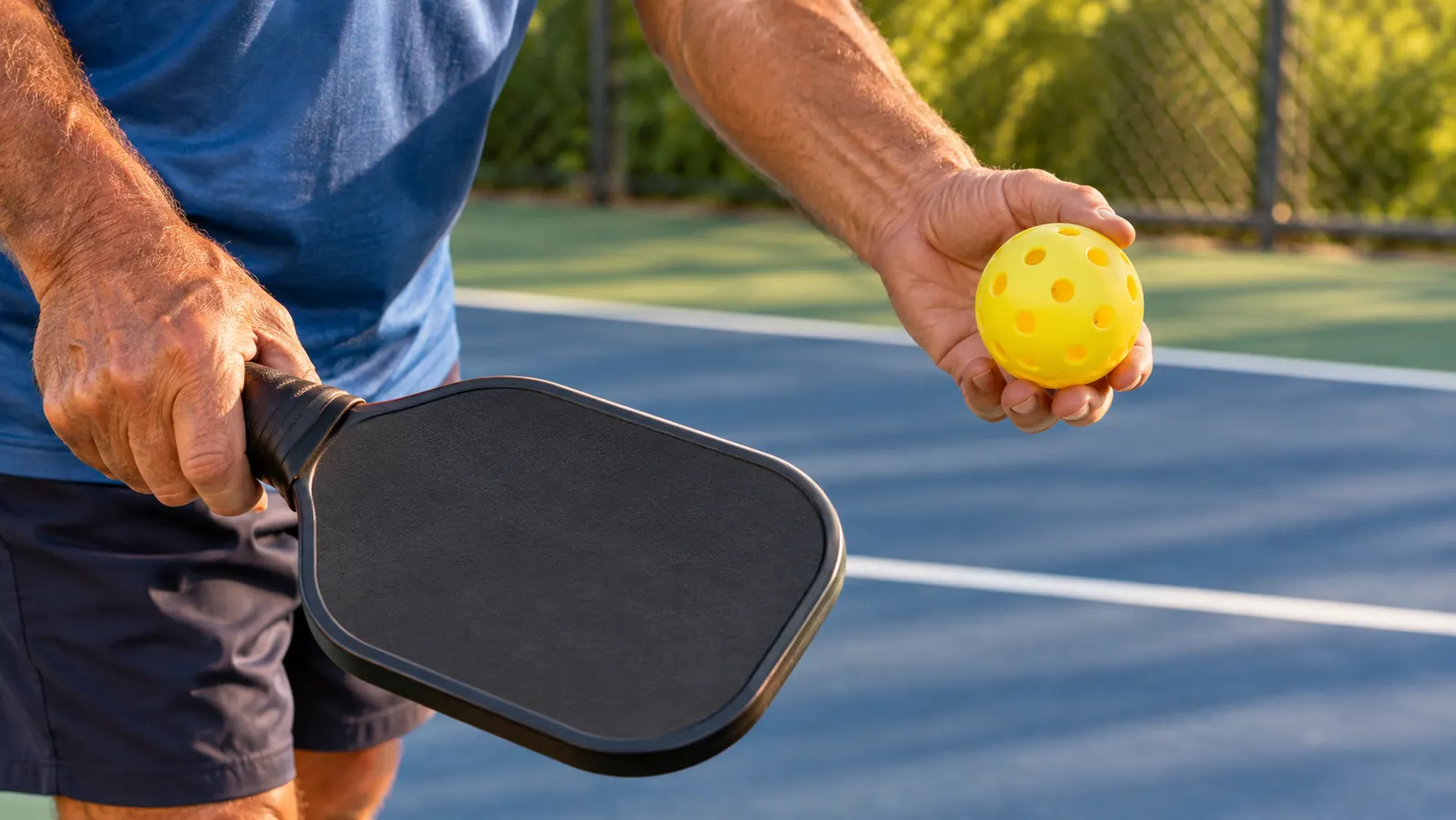
Franklin Sports X-40, USA Pickleball approved, 40 drilled holes, sold as a 3-pack. It is the one I reach for on a normal morning at the rec center, and the one I hand to a newcomer who is still learning to keep it low.
Amazon See the X-40 on Amazon →How I Have Been Playing With Both
I should be straight about how I test a ball, because I played with it does not tell you much. My regular partner is Phil, 66, retired, the neighbor who dragged me into this game back in the spring of 2024. We play Monday, Wednesday and Friday with whoever shows up. That means the level of play changes every morning, and so does the weather. I have played both of these balls on 50-degree mornings and on 90-degree afternoons, outdoors, on the same four courts.
What I watch for is simple. Does it fly the same way twice. Does a dink stay low. Does the bounce stay true after a few games, or does it go soft and start sitting up like a dying tennis ball. Does it crack. I keep a 3-pack of Franklin Sports X-40s in the bag and I replace them as they go, and I have been through a few packs since March. That tells you something about how often a rec-center game ends with a ball in the trash.
The honest part is that most players at my level will not notice a difference in the first game. Both balls are approved, both have 40 holes, both are hard plastic. Hand me one in a plain wrapper and I would need a rally or two to tell you which it was. The difference shows up over a month, in your hand and in how often you are opening a new pack, not in the first ten minutes.
Four mornings out of five, the X-40 is the ball I pull out of the bag, because my elbow casts its vote before my brain gets involved.
What 40 Holes and a Hard Shell Actually Do
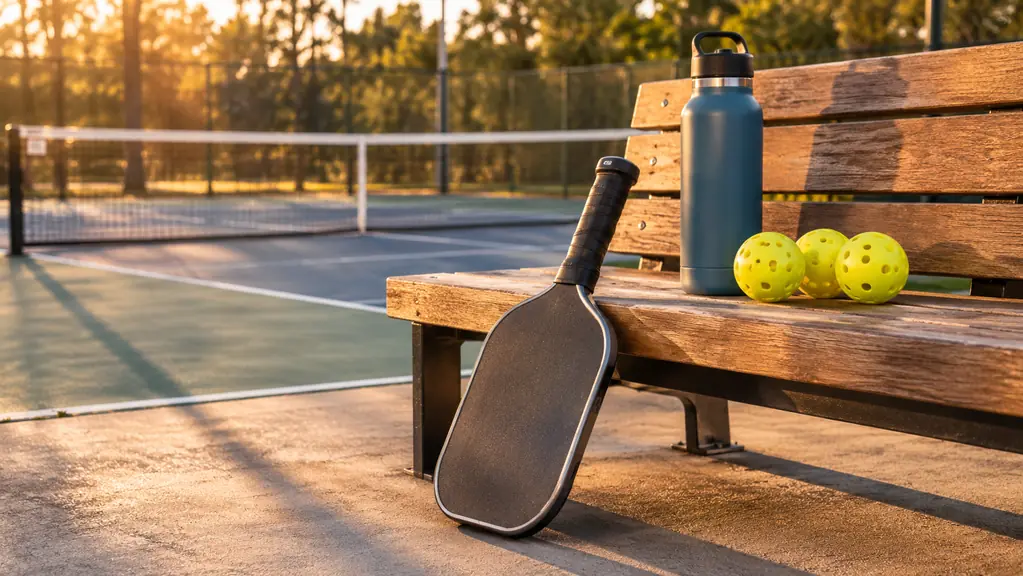
Forty holes is the outdoor standard, and the reason is wind. A ball with too few holes catches air and sails. A ball with too many gets knocked around and dies short. The X-40's holes are machine-drilled rather than punched, and Franklin Sports says that is what keeps the spin tight and the flight path balanced. I cannot measure spin and I am not going to pretend I can. What I can tell you is that on a breezy morning the X-40 held a line better than the scuffed house balls we used to dig out of the equipment bin.
The other piece is the shell. Polyethylene, rotationally molded, one piece. That is why it feels solid when you squeeze it instead of hollow and flexy. Hard plastic is what makes outdoor pickleball crack like a cap gun and play fast. There is no getting around that trade. A soft ball is an indoor ball.
When it rains or turns cold, my rec center moves us into the gym and the gym supplies its own indoor balls. I have stopped arguing about which kind is better. They are different tools for different floors, and the mistake is showing up outdoors with an indoor ball and wondering why every third shot sails long.
What I Liked
- Balanced flight, dinks stay lower off the paddle
- Easier on a sore hand than harder outdoor balls
- Bright, high-contrast colors are easy to track
- USA Pickleball approved with 40 machine-drilled holes
- Sold as a 3-pack, so a spare is always in the bag
Where It Falls Short
- Cracks faster in cold weather
- Not the fastest ball off the paddle
- Hard plastic is loud, and there is no way around it
Who Should Buy Which
Buy the Franklin Sports X-40 if you play rec-level doubles outdoors a few times a week, if you play a control game at the kitchen line, and especially if your hands or elbows complain by the second hour. It is also the friendlier ball for a mixed group where two people are brand new and two have been at it for years. The ball behaves, which lets everybody else settle down and actually play.
Buy the Dura Fast 40 if your group hits hard, if you play in hot dry conditions where balls die young, or if you are the person at open play who goes through a ball a week and is tired of it. It is a good ball for a strong group. Just go in knowing you are trading a little forgiveness for a little pace and a longer life, and that the trade is real in both directions.
And if you are splitting a pack with a friend or a spouse, buy the X-40s. Three balls that behave the same way every time are worth more to a casual group than three balls that fly faster than anyone can control. Most of the people I play with on a Wednesday morning are there to move around and see their friends, not to win a ladder.
A Word on Cold Mornings and Sore Elbows
One practical note before you go. Cold makes outdoor balls brittle, and both of these will crack sooner on a 45-degree morning than on an 80-degree afternoon. If you play through the winter on an outdoor court, keep a spare in the bag and rotate the newest balls into your actual games rather than your warmup. I learned that one the hard way in a Tuesday match that ended with a ball in two pieces and no spare within a hundred yards.
On the elbow: I am not a doctor and I am not going to pretend a ball is a treatment. My right elbow has been sore since my UPS years and it still is on some days. What I will say is that a harder ball stings more on a mishit and a more forgiving one stings less, and after two hours of doubles that difference is noticeable. If your elbow still hurts the next morning, that is a conversation for your doctor, not for a shelf in a sporting goods store.
One less thing to think about on a Monday morning
A 3-pack of USA Pickleball approved X-40s living in the bag means you are never the reason the game stops. Same ball, same flight, every time you pull one out.
Amazon Check availability on Amazon →