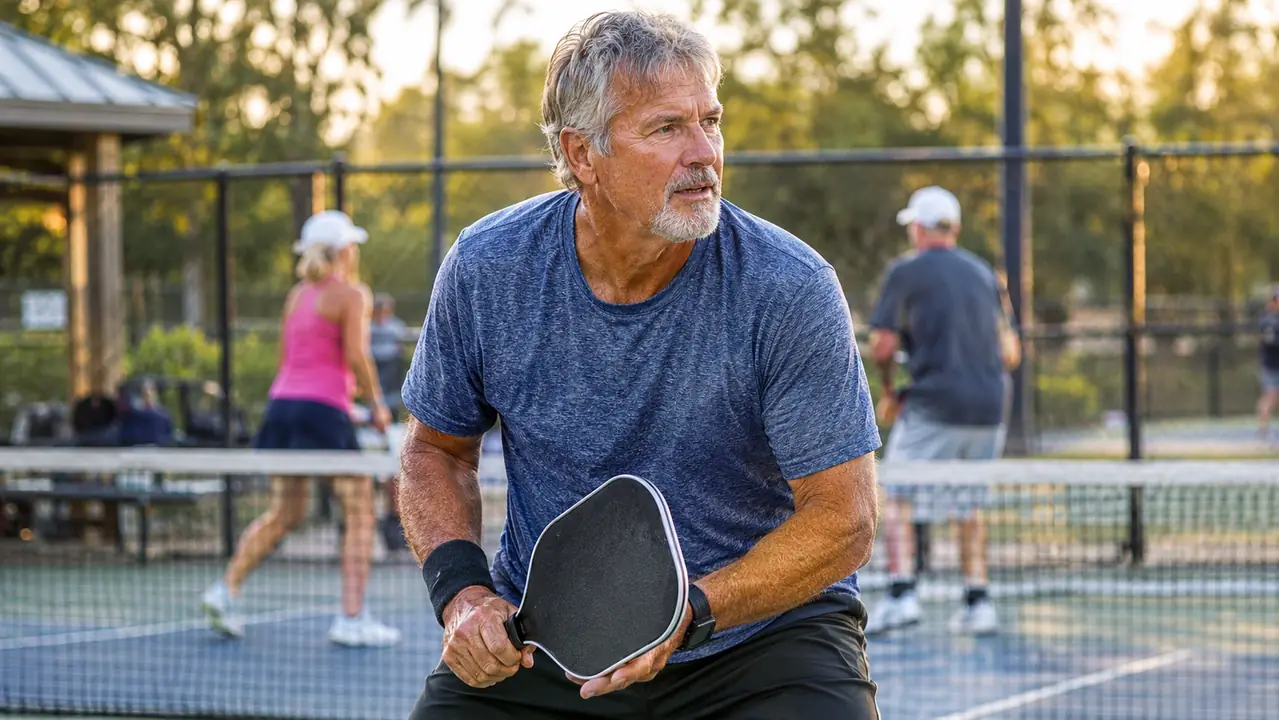
The first paddle I owned came out of a big-box store in one of those shrink-wrapped sets, and it did the job for about two weeks. Then I started hitting with people who could actually return the ball, and every hard shot buzzed up my arm and settled into my right elbow. I figured that was just what pickleball felt like. It is not. It was a cheap paddle with nothing inside it to absorb a hit.
I am Gary Prochaska. I am 59, I drove a UPS route in Knoxville for 31 years before I retired in 2023, and I started playing pickleball in the spring of 2024 after my neighbor Phil dragged me to open play at the city rec center. My elbow had been sore since long before pickleball ever entered the picture, so paddle weight and vibration were never abstract ideas to me. The paddle I would point a budget-minded player toward is the HEAD Extreme Elite, a fiberglass paddle with a honeycomb polymer core that I bought in mid March and carried as my only paddle until April. It is still in my bag. I lend it to newcomers at open play. What follows is how I would go about picking one now, if I had to start over with the money I actually had.
The Paddle I Hand to Newcomers at Open Play
Fiberglass face over a polypropylene honeycomb core, 7.8 ounces, 4 1/4 inch comfort grip, one year manufacturer warranty. This was my first real paddle and it is still the one I put in a stranger's hand on their first morning.
Amazon Check Today's Price on Amazon →Five Things That Decide Whether a Paddle Feels Good
A paddle is not complicated. It is a face, a core, a handle and an edge guard. What makes one feel comfortable and another feel like a paddle-shaped tuning fork comes down to five things you can check on a spec sheet before you ever swing it. Go in this order and you will not waste a season on the wrong one.
Step 1: Decide Your Weight Before You Fall for the Paint
The single biggest factor in how a paddle feels by the third game is how much it weighs. The HEAD Extreme Elite comes in at 7.8 ounces, or 220 grams, which sits right in the middle of where most recreational players should be looking. Light enough that I could hold it up at the kitchen line through a long rally. Heavy enough that the ball went somewhere when I hit it.
I made this mistake because nobody told me. I bought my starter set without looking at weight at all. It had no mass behind the ball, so I swung harder to make up the difference, and swinging harder with a buzzy paddle is how an elbow gets angry. In my second week of open play I borrowed a paddle that actually had some weight to it, felt the buzz disappear on contact, and Phil told me flat out it was time to buy a real one. He was right.
The rule of thumb I give a friend: if you have any history of elbow or wrist trouble, stay under about eight ounces and do not let anybody talk you into a heavier paddle for power in your first year. I am not a doctor and I am not going to sit here and tell you a paddle fixed my elbow, because it did not. What I will say is that the 7.8 ounce HEAD felt calmer in my hand than the starter paddle ever did, and I noticed it in the first session.
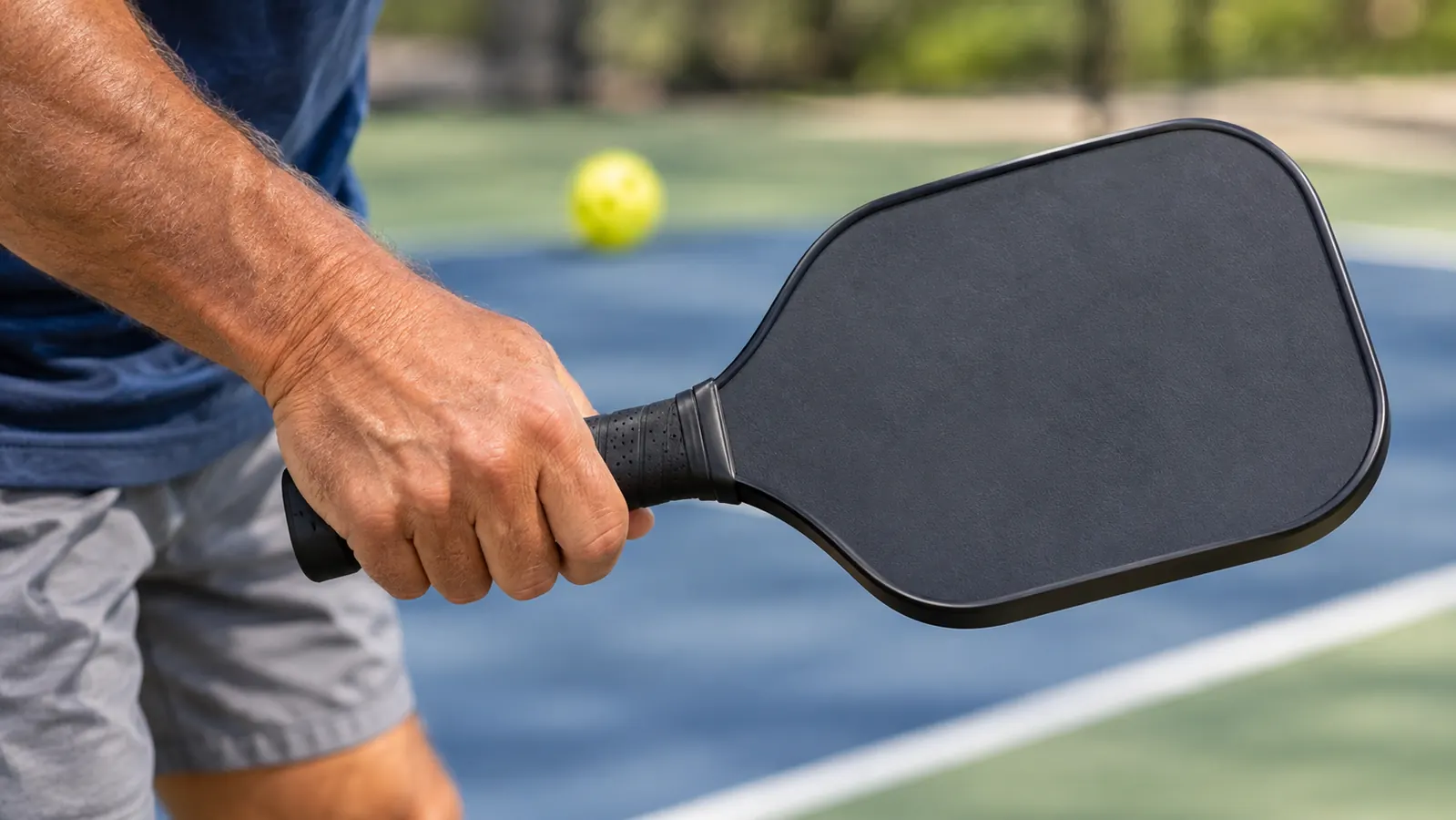
Step 2: Look at What the Face and Core Are Made Of
Two materials decide almost everything about how a paddle plays and how much of your money it takes: the face and the core. The HEAD Extreme Elite pairs a fiberglass face with a polypropylene honeycomb core, and the whole paddle is 11.0 millimeters thick, about seven sixteenths of an inch.
The honeycomb is the part that matters for comfort. Those little polypropylene cells give slightly on impact and take the sting out of the ball, which is why a paddle with a real core feels quiet and a cheap solid one feels loud. Fiberglass on the face is the sensible budget choice. It is stiff enough to send the ball back without extra effort. The carbon fiber paddle I moved to in April grabs the ball harder and I can feel the difference on dinks, but I did not need it to learn the game, and neither do you.
Thickness is the number most people skip. Eleven millimeters is on the thinner side, so the ball comes off it a little quicker and the feel is a touch firmer than a thicker core. For someone coming over from tennis who likes to drive the ball, that feels familiar right away. If your hands are slow or your elbow complains on contact, know that a thicker core will feel softer, and it will also feel slower. There is no free lunch in this.
Step 3: Put Your Hand Around the Grip Before Anything Else
The HEAD Extreme Elite ships with a 4 1/4 inch grip, which is roughly the middle of the range and fits most men's hands. If the handle feels like a broomstick, your fingers end up doing work your forearm should be doing, and that shows up in your elbow by Friday. If your fingers barely wrap around it, you will squeeze to keep hold of it, and that does the same thing.
The listing calls it an Ergo Grip and mentions minimal vibration through the handle. What that means in plain terms is a handle with a little shape to it instead of a plain cylinder, and I noticed the difference most on off-center hits, the ones near the edge where a cheap paddle lets you know it.
Here is how to test a grip without buying anything. Ask to hold three paddles between games at open play. Nobody at a rec center will say no, because every one of us got hooked the same way. Wrap your hand around each one and see which makes your fingers feel relaxed. That is your size, and you can learn more in 30 seconds of that than in an hour of reading about it.
Step 4: Match the Shape to How You Actually Play
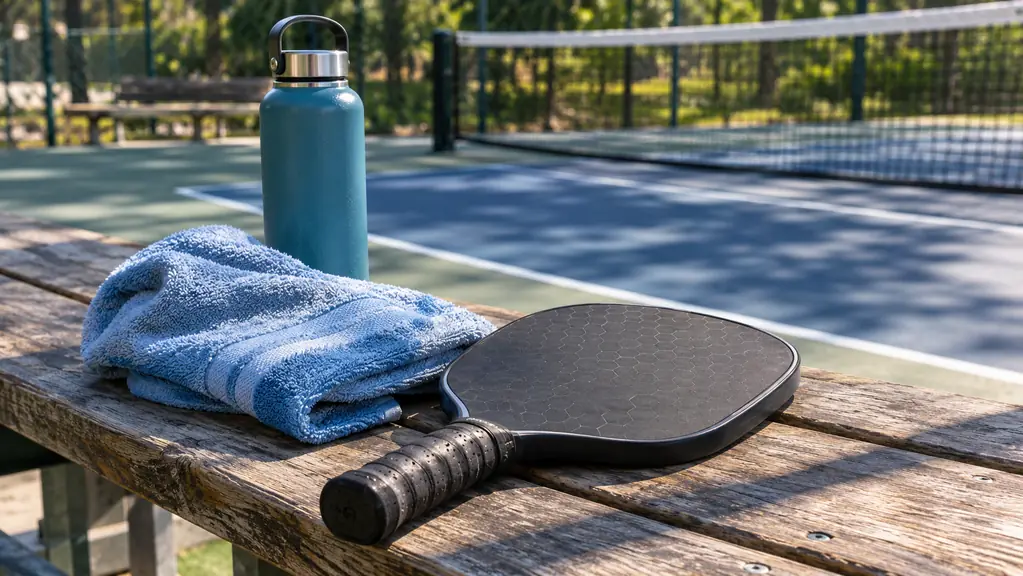
Length gives you reach and leverage on the serve. Width gives you a sweet spot that forgives a miss by an inch. The HEAD is 16 inches long and 7 7/8 inches wide, which is a fairly standard shape and a good compromise between the two.
Be honest with yourself about your game before you get clever about shape. I play the right side in doubles, so my job is to dink and reset and not to overpower anybody. A standard shape does that job fine. If you are tall with long arms, an elongated paddle might suit you, but the trade is a smaller sweet spot, and a smaller sweet spot is exactly the thing a mid-level player does not need.
The plain truth: at 3.5, the shape of the paddle is not what is costing you games. Your feet are. Buy a comfortable standard-shape paddle, spend the rest of your attention on getting to the kitchen line, and you will improve faster than the guy with the expensive elongated frame who keeps backing up.
Seven point eight ounces, eleven millimeters of honeycomb core, a four and a quarter inch grip. Comfort is not a mystery you have to guess at. Most of it is printed on the spec sheet.
Step 5: Buy One Step Down From the Pro Paddle, Then Test It in a Real Game
The paddle the pros are swinging is not the paddle you should buy, and any honest manufacturer will tell you so. HEAD labels the Extreme Elite an intermediate paddle, and that labeling is fair rather than insulting. It is built for people who have gotten past the flailing stage and want something that behaves the same way every time they swing.
Buying one step down from the top of the line gets you the same materials and the same construction logic without paying for the tournament extras you will not notice for another year. Then test it properly, because a paddle feels different in your hand than it does in a rally. Check whether the place you are buying has a return window, and write down the one year manufacturer warranty HEAD includes, since most people never think about it until something goes wrong.
Give it three full sessions before you decide anything. I mean that. Note whether your elbow is sore the next morning, whether your off-center hits feel dead or just soft, and whether your grip feels tired in the fourth game. If the answers are all fine, stop shopping and go practice. If two of them are bad, return it and try again. That is the whole process, and it beats reading reviews at midnight.
What Else Helps
A dead ball makes any paddle feel worse than it is. When the rec center's supply has gone soft and chalky, every paddle seems to have no pop. I keep a three pack of Franklin X-40 outdoor balls in my bag now and swap one out the moment it cracks, which happens faster in cold weather. That one change makes a bigger difference to how a paddle feels than most people realize.
Court shoes matter more than paddles, and this is coming from a man who wrote a whole guide about paddles. I played in old running shoes for a while until they slid out from under me on a wet gym floor going for a drop shot. After that I bought one pair of proper court shoes and stopped thinking about my feet entirely.
Two more things that cost nothing. First, ease up on your grip. Most beginners hold the handle like they are afraid it will escape, and a tight grip is the shortest road to a sore forearm. Second, if your elbow actually hurts, go see somebody who knows elbows. I wear a basic strap on some days and it helps me, and that is the entire claim I will make for it. A paddle is a piece of sporting goods, not a medical device, and anybody who tells you otherwise is selling something.
If You Want One Paddle to Start With, Start Here
7.8 ounces, fiberglass face over a polypropylene honeycomb core, 4 1/4 inch comfort grip, 16 by 7 7/8 inches, one year manufacturer warranty. It was my first real paddle. It is still the one I hand to people on their first morning at open play.
Amazon Check Today's Price on Amazon →