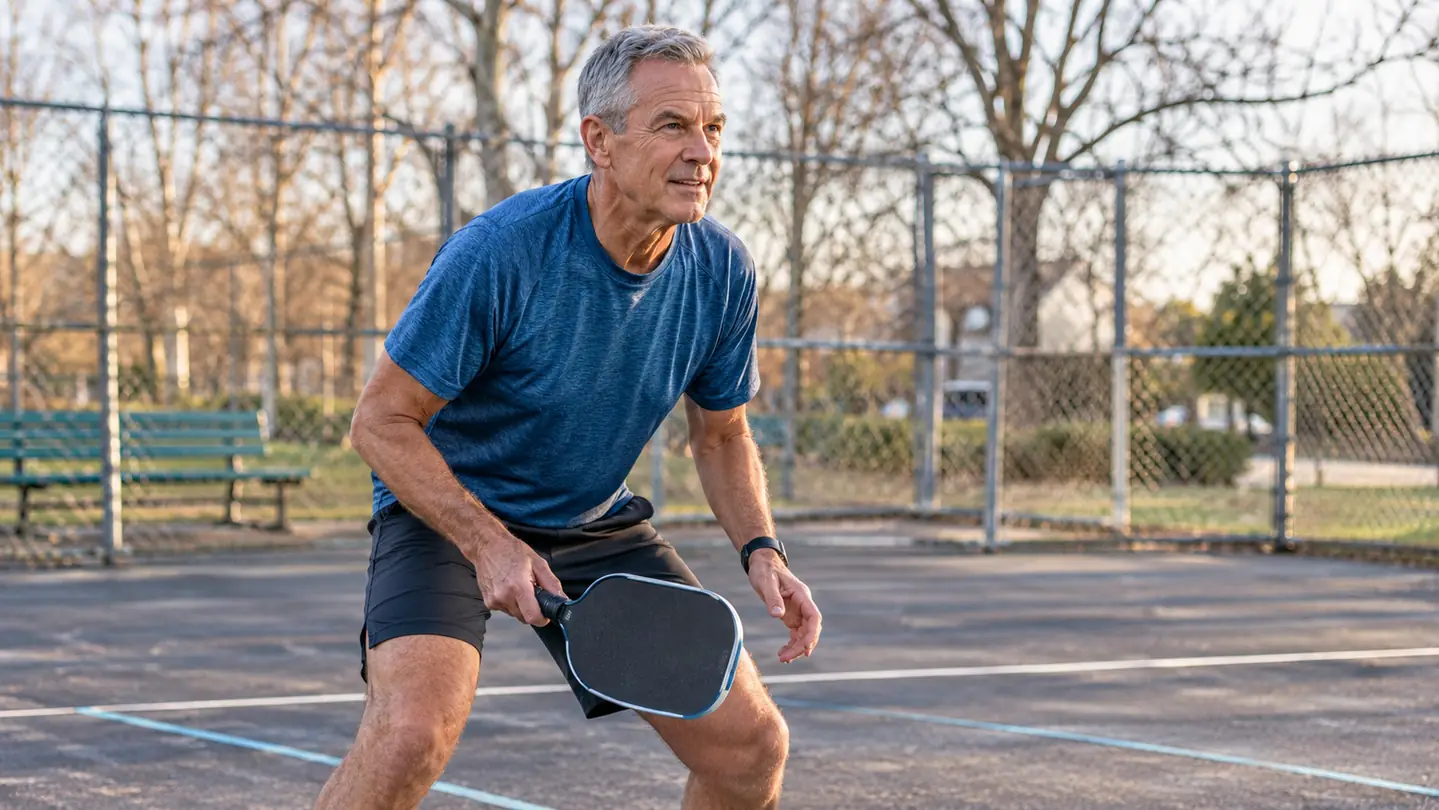
For about three weeks in early April I could not keep a dink down. Every third or fourth ball off my paddle would float up around chest height, and the man across the net would put it away while I was still coming out of my swing. I was playing doubles three mornings a week at the city rec center in Knoxville, same as always, same partner most days. My legs were fine and my eyes were fine. I was swinging at balls I should have been catching, and a carbon fiber face will tell on you for that faster than any paddle I have owned.
By then I had been using the Vatic Pro Prism for a couple of weeks. Sixteen millimeter core, carbon fiber face, foam injected walls, about eight ounces on my kitchen scale, 16.3 inches long and 7.5 wide. The paddle was not my problem. Control with a carbon fiber paddle is not a gift the paddle hands you at the register. It is a set of habits, and the paddle only pays you back once you have them. I spent the rest of April and most of May building those habits, and here is what actually moved the needle, in the order it helped.
The Paddle I Rebuilt My Hands Around
The Vatic Pro Prism has been my main paddle since early April, three mornings a week, indoors and out. Carbon fiber face, 16mm core, foam injected walls, about 8 ounces, and a sleeve comes with it. Nothing on it will fix your hands for you. It will reward them once you do.
Amazon Check Today's Price on Amazon →Step 1: Loosen Your Grip Until the Paddle Stops Steering You
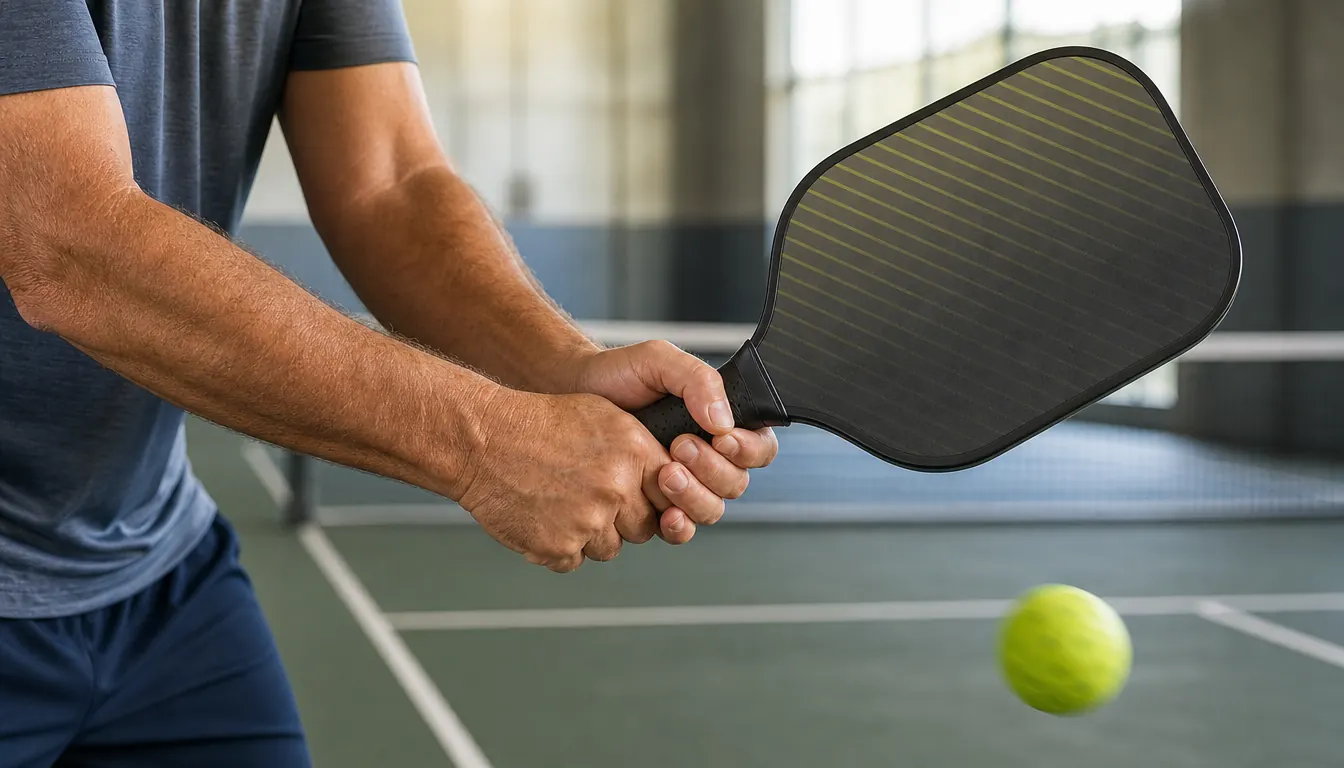
The first thing I noticed watching video of myself, which is a humbling exercise at any age, was that I was holding the handle the way I used to hold a stack of parcels. Thirty one years on a UPS route taught my right hand to clamp, and a paddle handle did not get an exemption.
A tight grip costs you twice. It locks the wrist, so the paddle face cannot make the small last-second adjustment at contact. And it puts the paddle head in charge of the swing, which means your arm starts steering instead of your shoulder turning. A carbon fiber face is stiffer than the fiberglass I started out on, and stiff means honest. Small errors go straight into the ball instead of getting swallowed up.
What I changed: grip pressure at about a three out of ten, where ten is white knuckle and three is loose enough that a firm tug could take the handle out of my hand. I checked it between every point for two weeks, which felt silly and worked anyway. By the end of April my forearm was noticeably less tired after a session.
I also ran a crude test to convince myself. One game gripping tight, the next game at three out of ten, alternating all morning, and Phil kept score. The loose games were not close to perfect, but they had fewer of the unforced errors at the kitchen line, the ones where nothing dramatic happened and the ball simply drifted long. If your hand is sore after a session and your forearm is tight, look at the grip before you look at the paddle. And if the soreness lives in the elbow itself rather than the muscles, that is a conversation for your doctor, not a paddle aisle.
Step 2: Take the Backswing Out of Your Kitchen Line Game
Behind the kitchen line the ball gets to you before a full backswing can happen. I had a little tennis as a kid and my instinct under pressure was to take the paddle back. In pickleball that instinct gives the ball a shove it does not need, and it puts your contact point late and behind your hip, which is exactly how a ball ends up rising.
The fix is to start the paddle in front of your sternum and never let it travel behind your back hip. Think of it as a wall you shift a few inches, not a hammer you swing. Elbow bent, paddle head up above the wrist, ball comes to you. The moment I drop the head and reach, I am back to pop ups and I can feel it before the ball even lands.
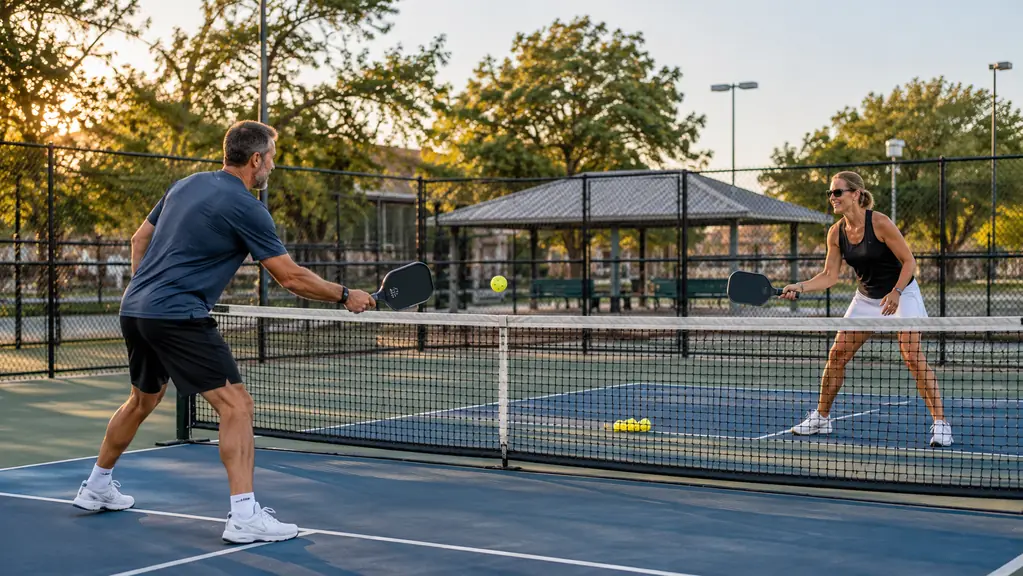
One adjustment helped more than any tip I read. I set up about six inches closer to the kitchen line than felt comfortable. From that close, a big swing is not physically available to me, so my body had to solve the problem with a short quiet motion. It also took away the extra half second where I used to stand around thinking about swinging.
Phil caught the other half of it. On the video he could see my right elbow drifting away from my ribs when I got tired, and once the elbow flies out the paddle follows it back. Now I check the elbow the same way I check the grip, between points, and I bring it back in. It is not a technique that will impress anybody watching from the bench. It just keeps the paddle in front of me where it belongs.
Step 3: Catch the Ball Instead of Hitting It
This one took the longest to feel normal. A dink is not a shot you hit, it is a ball you catch and send back. Contact out in front of the body, paddle face open just a hair, and the paddle giving a little as the ball arrives. If you can hear a sharp pop off your paddle at the kitchen line, you are hitting, and the ball is probably going up and giving your opponent an easy put away.
Vatic Pro describes the Prism's cold molded construction as a way of adding control and touch without relying on intense heat, and the foam injected walls as spreading load more evenly across the face. I am not in a position to verify how a factory does that. What I can tell you is what my hand notices. A ball caught toward the edge of this paddle does not twist it the way my starter paddle twisted, so the second ball is easier to get to and the face stays where I pointed it.
The drill that taught me was slow and boring. Phil stood about six feet away and fed me soft balls underhand, one at a time, and I tried to send each one back without a sound. First ten minutes of a session, before we ever played a point. He said the sound was the whole lesson, and after two weeks I agreed with him. You cannot fake a quiet catch with a fast swing.
Three out of ten on grip pressure, no backswing past my back hip, and my pop ups went from about four a game to roughly one.
Step 4: Let the 16mm Core Do the Work
A thicker core gives the ball more time on the face, and more time on the face means you do not have to supply the power yourself. The Prism lists a 16mm core and about 8 ounces. My starter paddle from the big-box store was thin, light and buzzy, and I swung it hard because that was the only way to get anything out of it. Then I brought that same hard swing to a paddle that did not need it.
On blocks and resets I now hold the paddle still and let the ball come to it. That is a strange feeling for somebody who spent a working life muscling things into place. The paddle takes the pace off and the ball drops. When I add force, the ball sails. On a ball hit hard at my chest, the paddle stays where I put it and the ball goes back short and low without me doing much of anything.
Same idea on the soft game. Rolling the ball is a different motion from driving it, and it starts at the shoulder rather than the wrist. When I roll, the paddle face stays quiet and the ball clears the net by inches. When I flick, the wrist takes over and the ball sits up. It took a month of catching before rolling even made sense to me, so do not worry if it feels backwards at first.
Eight ounces is not the lightest paddle at the rec center and it is not the heaviest. If you have a cranky elbow, weight and grip both deserve a look. The Prism lists a 5.3 inch grip size, which fit my hand without the extra wrap I used to add. None of this fixed my elbow. I still wear a strap on damp mornings. What I will say plainly is that the Prism felt calmer in my hand than the wooden core starter set I learned on, and calm is worth something when your elbow has opinions.
Step 5: Drill One Shot Until It Repeats
None of the above survives contact with a real game unless you drill it. My neighbor Phil, who dragged me to open play in the first place, and I now take twenty minutes before we ever sign a court and work on exactly one thing. Not five things. One. Cross court dinks to a target for a month, then resets off a hard drive the next month, then serves, which I am still bad at.
The counting matters more than the drilling. Fifty cross court dinks, and I count only the ones that land in the kitchen and stay below waist height at the net. Early on I was under thirty out of fifty and did not want to write it down. By the end of May I was in the low forties on a good morning and high thirties on a tired one. Those numbers are the only progress report I trust, more than how a game felt while I was in it.
When it rains, the rec center moves us into the gym and I do wall work instead. Twenty minutes of a ball coming back off a wall is worth more than an hour of casual rallying, because the wall never misses and never gets bored of you. Stand close, keep the paddle in front, count how many you can catch clean before the first one gets away from you.
Expect weeks, not days. I am around a 3.5 and I did not move up a level from any of this. What changed is that I hand away fewer of the long rallies I used to lose by inches. That is not a rating. It is the difference between walking off the court annoyed and walking off it ready to play again on Wednesday.
What Else Helps
A paddle is one piece of a morning. Three other things made the control work stick. Fresh balls, shoes that grip, and a bag that keeps the gear where I can find it. Old balls go soft and slick, and a soft ball off a carbon fiber face is a coin flip every time. The Franklin X-40 is what I keep in the bag, a three pack, replaced as they crack. They crack faster in cold weather, so I check them before a cold morning instead of finding out mid rally.
Shoes matter indoors more than people think. In May I went for a drop shot on the gym floor in old running shoes and my feet went out from under me. The Skechers Viper Court Smash has been on my feet since, indoors and out, and the grip is the whole difference.
The Mangrove bag hangs on the fence by its hook so I am not digging through the back of the CR-V for balls while three people wait on court. That is a small thing that happens every single session, which makes it not small.
One more gear note, and it goes with the elbow. I keep a basic strap in the side pocket and wear it on damp mornings and after a heavy yard weekend. I am not going to tell you a strap or a paddle prevents anything. If your elbow hurts enough that you are changing how you play, get it looked at, then come back and work on your grip.
And the one that has nothing to do with gear: play with somebody better than you once a week and ask them what they saw. Phil tells me my paddle head drops when I get tired, and he has been right every single time.
Control is not a purchase. It is a habit you build in twenty minute blocks and then take into a game where it falls apart twice before it holds. The Vatic Pro Prism has a face that behaved the same way every time I did my part, which is all I ever wanted from a paddle in the first place.
If Your Hands Are Ready for It, This Is the Paddle
Carbon fiber face, 16mm core, foam injected walls, about 8 ounces, a paddle sleeve included, and a 30 day manufacturer warranty. Start with the grip and the backswing. The paddle will do its part.
Amazon Check Today's Price on Amazon →