
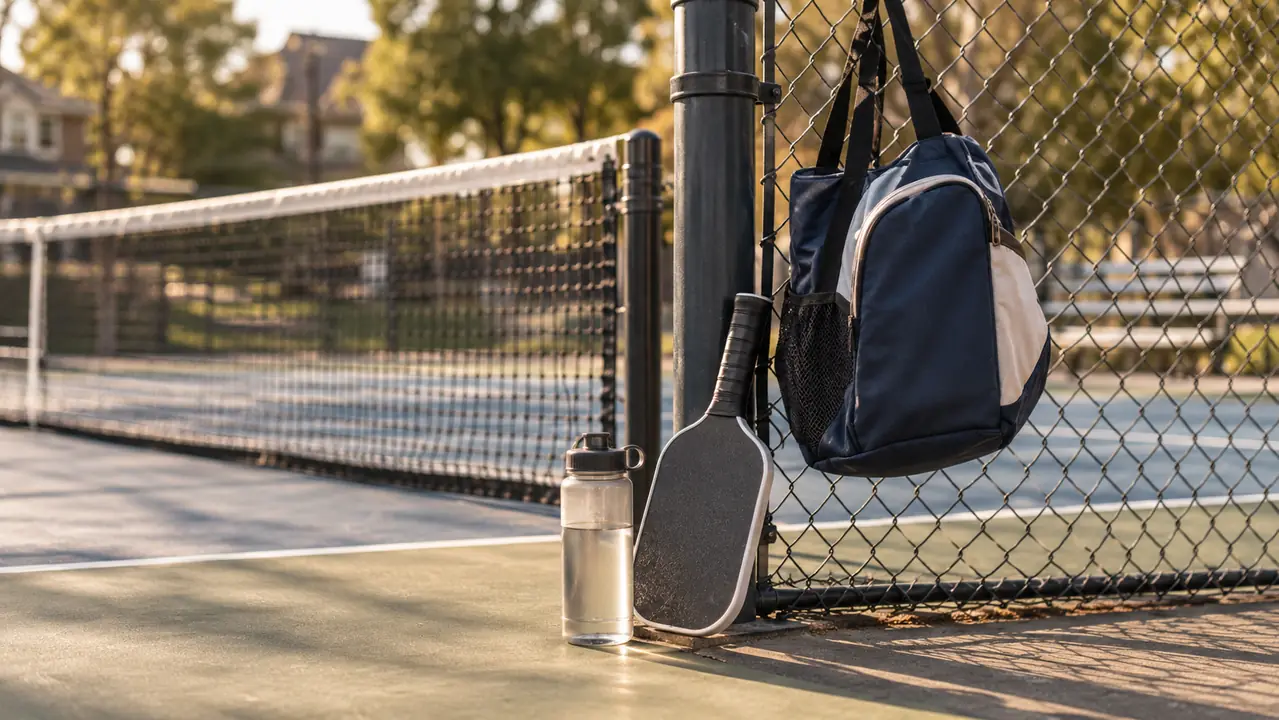
Every Monday, Wednesday and Friday I load the same things into a bag and drive eleven minutes to the city rec center: two paddles, a three-pack of Franklin X-40 balls, a towel, a water bottle and an elbow strap I keep insisting I do not need. For a long stretch all of it lived in a gym duffel that also held six years of gas station receipts. In early June I bought the Mangrove pickleball bag, the one with the fence hook and the five pockets, and the duffel went out to the garage. My regular partner Phil, 66, carries a Franklin sling bag instead. We have laid both of them out on the same bench more times than I can count, and I have borrowed his more than once when I was running late and did not want to haul mine in.
The short answer is that these two bags answer different questions. The Mangrove is built to carry everything a three-game morning requires and then hang on the fence where you can reach it without bending down. The Franklin sling is built to carry a paddle, some balls and a bottle and then get out of your way. If you drive to the courts and you bring a spare paddle, the Mangrove is the better fit by a wide margin. If you walk in with one paddle and nothing else, the sling is lighter and simpler and I would not talk you out of it.
| Mangrove Pickleball Bag | Franklin Sling Bag | |
|---|---|---|
| Capacity | Large main compartment, 15 inches long by 7.7 wide by 19.3 tall. Two paddles, a towel, a bottle and a sleeve of balls fit with room left over. | One paddle, a sleeve of balls and a bottle, and that is the load. A second paddle is a stretch. |
| Organization | Five dedicated pockets and a zipper closure, so balls, keys and the elbow strap each have a home. | One main space. Everything goes in together and comes out together. |
| Fence hook | A built-in hook that hangs the bag on the chain link at shoulder height between games. | Nothing to hang it from. It goes on the bench or on the ground. |
| Comfort when it is loaded | Padded back panel and an adjustable air-mesh shoulder strap spread the weight across your back. | A single strap across the body carries a light load fine and a heavy one less so. |
| Getting it on and off | Sling it over one shoulder, or set it down and forget it for the morning. | One strap over the head and you are walking. Nothing to think about. |
| Room it takes in the car | It is a large bag and it wants real space in the back. | Slides into a footwell or behind a seat and disappears. |
| Comfort when it is nearly empty | Fine, but it is still a big bag riding on your shoulder. | Barely there. This is the bag you forget you are wearing. |
| Wet mornings and dusty courts | Water-resistant and scratch-resistant polyester that wipes clean. | A lighter shell with less between your gear and the weather. |
| Best for | Players who drive to the courts, carry two paddles and stay for three games. | Players who walk in with one paddle and want nothing extra to manage. |
Where the Mangrove Bag Wins
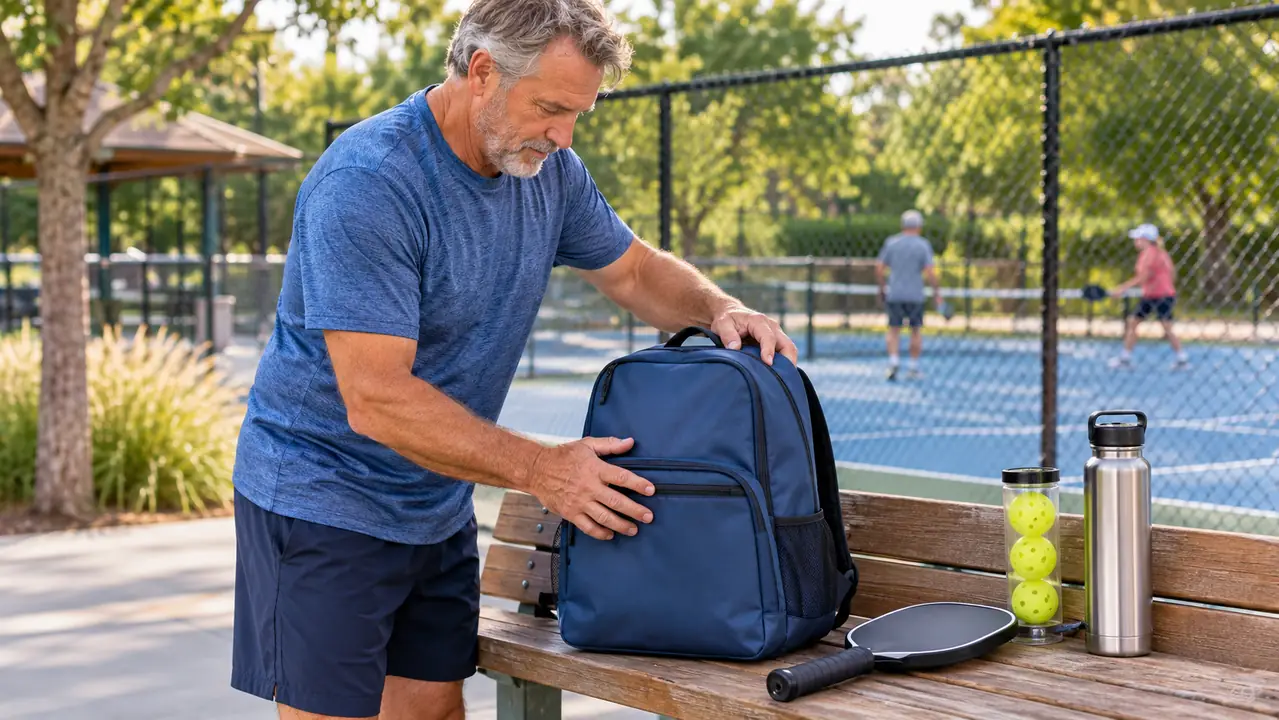
The first difference you notice is capacity, and it is not subtle. The Mangrove is listed at 15 inches long, 7.7 inches wide and 19.3 inches tall, with one large main compartment. I put the Vatic Pro Prism down one side and the HEAD Extreme Elite down the other, because I lend that second paddle to newcomers at open play and I got tired of watching them swing a starter paddle that rattles in the hand. The towel, the bottle and a three-pack of X-40s go in on top of them. There is still a corner left over for a light jacket in October. Before this bag I tried two other setups and both of them failed the same way. The gym duffel had one long space with no shape to it, so the paddles slid to the bottom and the balls collected in a corner I could not reach without dumping the whole thing onto a bench. Then I tried a plastic tote in the back of the CR-V, which worked fine until a rainy Monday in May when I opened it and found a damp towel sitting on top of dry balls. Neither one hung on anything, and neither one kept a wet towel away from a dry one.
Five dedicated pockets is the kind of line that shows up in every listing and means nothing until you have spent ten minutes of a forty minute court slot digging through a duffel for a ball. I keep the balls in one pocket, the elbow strap in another, keys and phone in the small zip pocket, and the towel where I can grab it with one hand. Everything closes with a zipper, so nothing ends up on the pavement when I set the bag down harder than I meant to. That sounds like a small thing. It is the whole reason I bought the bag.
The fence hook is what makes it a pickleball bag instead of a duffel with a strap. I hang it on the chain link at shoulder height when we switch ends, and my gear is right there instead of on the ground where a stray ball rolls into it. The back panel is padded and the shoulder strap is adjustable and air-mesh, which mattered more than I expected on the walk in from the CR-V with a full bottle. The polyester is water resistant, so a damp morning wipes right off, and there are reflective strips on the front for the mornings I get there before it is fully light. It is a soft bag with no wheels, and it carries a one-year warranty. The morning I noticed the difference was a Wednesday in late June, first slot at seven, dew still on the courts. In the old setup my bag sat on the concrete and the bottom came back wet and gritty, and I wiped my hands on my shorts before every serve. Hanging it changed that entirely. The bottom of the bag never touches the ground now, and the pocket with the elbow strap stays dry.
One more thing I did not expect. The strap adjusts enough that I can swing the bag around to the front without taking it off, which means I can get into the pockets while I am standing at the net waiting for a court. On a hot morning, hunting for the elbow strap or a dry towel, that little move happens twenty times a session. It is not the reason to buy it, but it is the reason I stopped thinking about the bag at all.
Where the Franklin Sling Bag Wins
Here is where I have to be fair to Phil's bag. The Franklin sling takes up almost no room. It slides into the footwell of the CR-V or behind the seat and you forget it is in there. The Mangrove is a large bag and it wants real space in the back, and I have moved it out of the way to load groceries more than once. If you are already hauling folding chairs or a cooler, or if two people are sharing one vehicle, that difference is not imaginary.
The sling also wins on getting it on and off, and it is not close. One strap goes over your head and you are walking. No second strap to find, nothing to set down, nothing to pick back up. When they call courts at the rec center and I am still in the parking lot, Phil is already at the fence and I am still fussing with a shoulder strap. For a quick single game, or for somebody who plays twenty minutes and leaves, that is the entire argument right there. Phil has his bag on and is walking while I am still threading an arm through a strap, and he reminds me of it every single week. He also does not have to think about where to put it once he is on the court. His bag goes on the bench beside him and it takes up maybe a foot of space, which matters when four of us are sharing one bench and everybody is trying to keep a bottle upright.
A sling also forces you to travel light, and some people need that. One main space means one decision: everything in, zip it, go. I have watched Phil pull a paddle, a sleeve of balls and a bottle out of his bag in the time it takes me to unzip three pockets. If you are the type who ends up carrying four water bottles and a folding chair you never actually sit in, a bag that will not let you do that is a feature and not a limitation.
The limit is real, though. A sling carries one paddle comfortably. Phil's holds his paddle, a sleeve of balls and a bottle, and that is the end of it. If you bring a backup, or you lend a paddle to a newcomer the way I do most mornings, you are already outside what the bag was built for. The same goes for a towel on a wet morning and a pair of shoes you do not want to wear home.
The sling is a bag you carry. The Mangrove is a bag you park, and I have not dug for a ball since June.
Hang It on the Fence and Stop Digging for Balls
Two paddles, a towel, a bottle and five pockets, all of it at shoulder height between games. The Mangrove carries a full morning at the rec center without turning into a search party.
Amazon Check Today's Price on Amazon →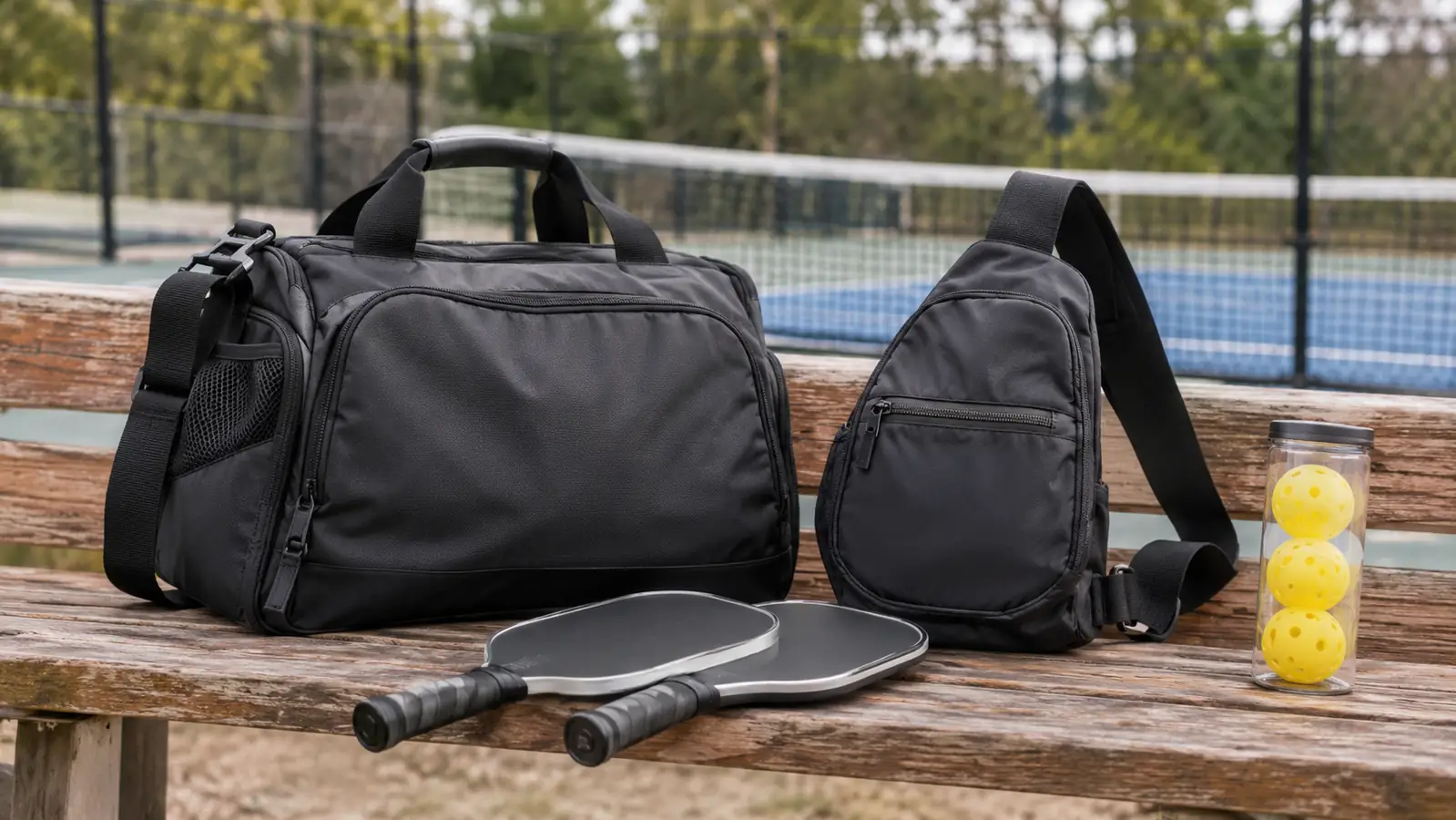
Who Should Buy Which
Buy the Mangrove if you drive to the courts, you carry two paddles, and you stay for more than one game. That is most of the people I play with on a Monday morning. It also makes sense if you lend gear, if you keep spare balls and a towel in the bag, or if you are tired of loading and unloading the car every session. The fence hook alone changed my routine more than I expected, because my gear sits at chest height now instead of on the concrete where I have to bend for it with a sore elbow. My wife Donna plays with me some Saturdays, and when she comes along we take one bag instead of two, because her paddle fits in beside mine and there is still room for her bottle. That is the sort of thing I did not think about when I bought it and now use most weekends.
Buy the Franklin sling if you walk or bike to the courts, you play with one paddle, and you want to carry as little as possible. It is also the easier bag to hand to a kid or a grandkid who is just starting out and does not need a rolling locker to play a game that fits in a lunch sack. If your whole kit is a paddle, a sleeve of balls and a bottle, a bigger bag is just more to carry around and more to search through when you are late.
There is a middle case worth naming. If you play twice a week, drive five minutes, and carry exactly one paddle and one bottle, the sling does the job and you will not miss a thing. But the moment you start leaving a spare paddle in the car for a friend, or you want dry socks and a rain jacket in October, you are back to wanting pockets. That is how I ended up with the Mangrove, and I do not expect to go backward.
What neither bag will do is fix a sore elbow, a bad knee or a shoulder that aches on the drive home. I have a sore right elbow from thirty-one years of lifting packages, and a bag only changes how the weight rides, not whether the joint likes it. If something hurts when you play, talk with your doctor before you buy gear hoping the pain goes away on its own.
For what it is worth, I left the question open for a couple of weeks and kept coming back to the same facts. I bring two paddles. I lend one out most mornings. I like my gear at eye level on the fence instead of on the ground. That made the decision for me. If your morning looks different from mine, the smaller bag is not a compromise, it is just the right tool for a lighter load.
One Bag That Carries the Whole Morning
Large main compartment, five pockets, a padded back and a hook that keeps your gear off the ground. If you are the one who brings the spare paddle for everybody else, this is the bag that holds it.
Amazon Check Today's Price on Amazon →