The Franklin X-40 is the ball most people carry to the courts at my rec center, and for the first month I played with one I figured that settled the question. Then on a cold morning in late March, a ball I had been rallying with for two games cracked along the shell, and the replacement I pulled out of the same pack bounced flatter than the one I had just retired. That is the part of a ball review nobody writes. Franklin Sports makes a good outdoor ball. It also has a weak spot, and the weak spot lands on the kind of morning a lot of us actually play in.
I am Gary Prochaska, 59, retired off a UPS route after 31 years, and I play doubles three mornings a week in Knoxville. I bought my first three pack of X-40s in late March 2026 and I have bought more since. What follows is what a season of using them as my only outdoor ball taught me: what holds up, what does not, and how to tell when a ball in your bag has quietly stopped being the ball it was. No ratings claims and no promises. Just what I noticed, in the order I noticed it.
The Quick Verdict
A fast, true outdoor ball most rec players will be glad to own. The honest catch is the shell: it cracks instead of going soft, and a cold morning hurries that along, so plan on replacing packs more often than you would guess.
Amazon Check Today's Price →The ball that keeps earning its spot in my bag
Forty machine-drilled holes, a one-piece molded shell, USA Pickleball approved, sold in a three pack. Mine have ridden in the bag since late March. If you want to see the current pack options and today's price, the listing is right here.
Amazon Check Today's Price on Amazon →What the X-40 Is, Stripped Down
It is a 2.91 inch outdoor ball with 40 machine-drilled holes and a one-piece polyethylene shell made by rotational molding. It comes in a three pack, it carries USA Pickleball approval, and Franklin Sports lists a 90 day limited warranty on it. The one-piece construction matters more than a spec sheet suggests, because there is no stitched seam to come apart the way a two-piece ball can. When an X-40 fails, it fails across the shell itself, and that changes how failure feels in your hand.
The 40 holes are drilled to a consistent size, and you can feel that in the flight. A ball with uneven holes wobbles a little at the end of its arc, and once you notice the wobble you cannot unsee it. These fly flat and hold their line, which is most of the reason the ball has the following it does. If the tournament pedigree matters to you, this is the ball used at the US Open Pickleball Championships, and it is approved for USA Pickleball and APP Tour play.
How I've Used It
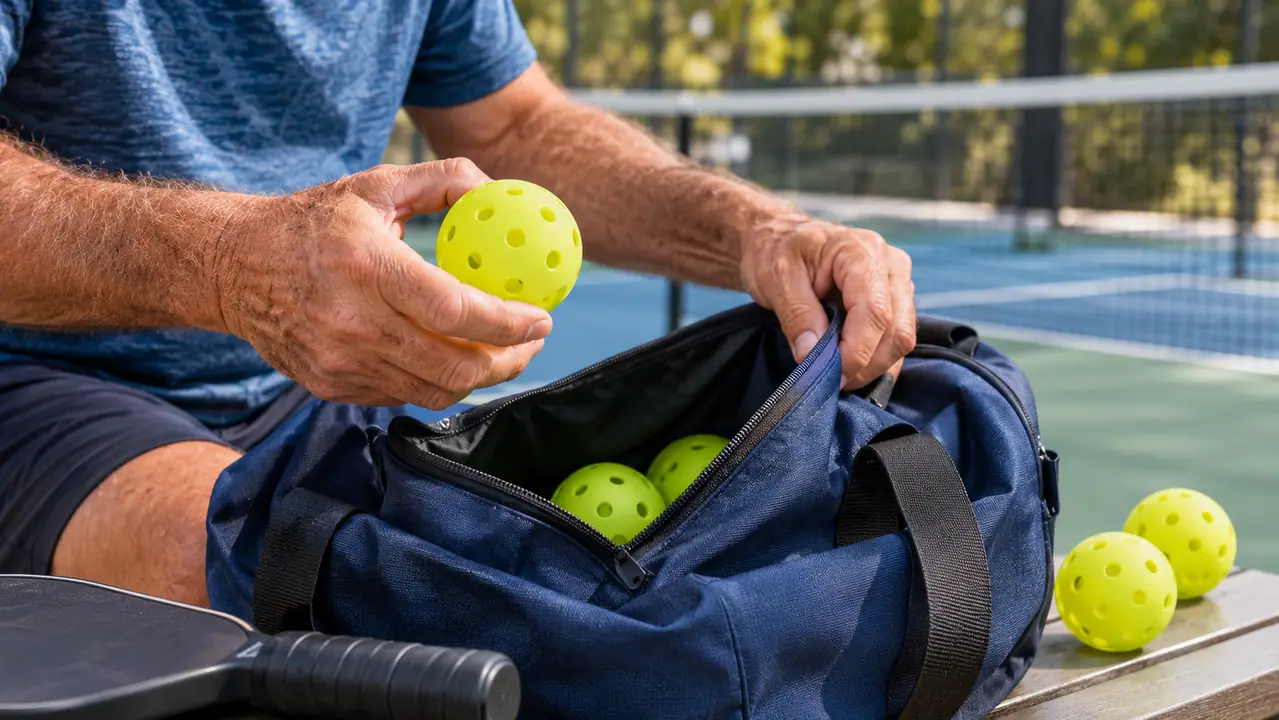
Three mornings a week, Monday, Wednesday and Friday, outdoors at the city rec center from late March through the summer, and indoors in the gym when it rains or turns cold. Indoors the gym puts out its own indoor balls, so the X-40s stay in the bag for outside duty. I keep a three pack with me and pull from it as balls crack or go flat. I have been through several packs now, and I have stopped thinking of them as a purchase and started thinking of them as a supply.
My neighbor Phil and I split a pack most of the time, and I hand a ball to anybody who shows up without one, which is how three balls disappear faster than you plan for. I also keep an old paddle in the bag to lend newcomers, and the first question they ask is what ball to buy. Having a spare X-40 in the bag makes that an easy answer instead of a longer conversation.
My test for a ball is not scientific. I squeeze it hard in one hand and feel for give. A ball that folds easily is finished. Then I hold it at eye level and drop it on concrete, and I want it coming back to about waist height. Then I turn it in the light and look along the curve of the shell for hairlines. The X-40 passes the first two right up until it does not, and the hairline is usually what fails first.
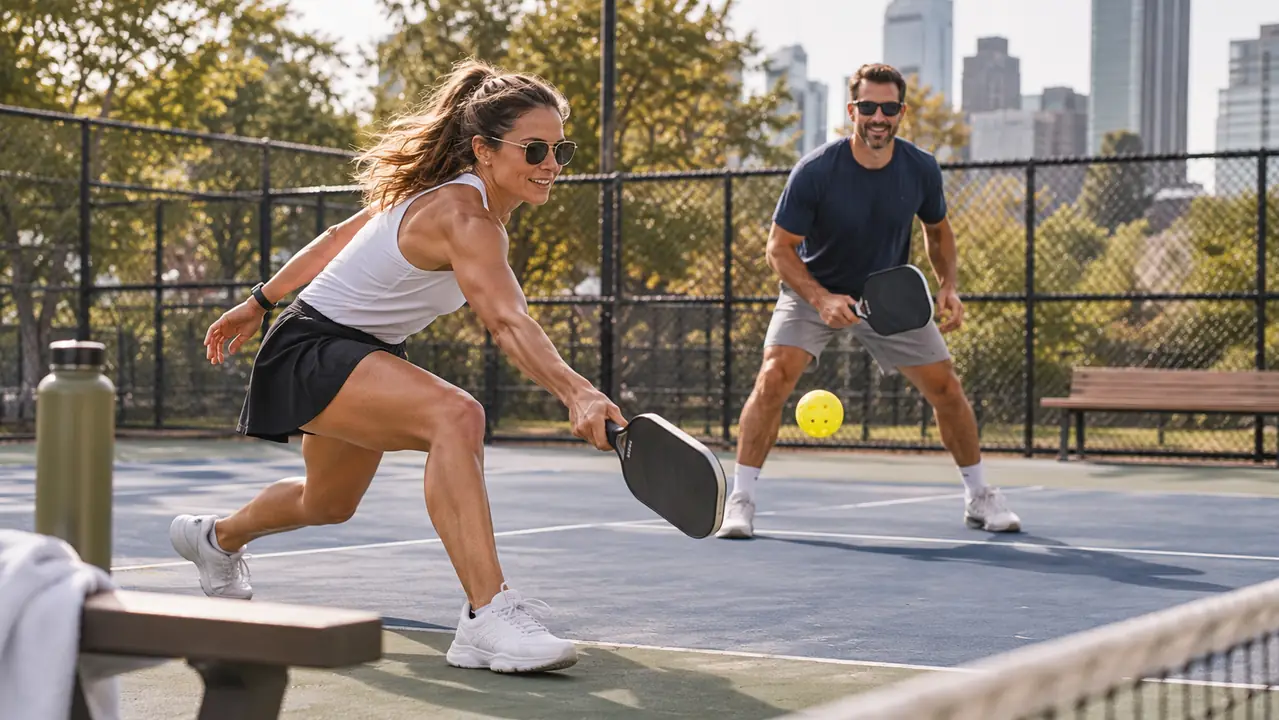
What changed in my game: rallies got faster and my dinks sat up a little higher than they did with the softer balls I had been used to. That is not the ball doing me a favor. It is the ball being firmer and livelier than what I came from, and it took about three sessions to stop popping the ball up at the kitchen line. What did not change: my serve, my rating, or my habit of losing the first game of the morning. A ball is not a coach, and I would not trust anyone who told you otherwise.
Nothing about the shell had changed until it gave out. Two games in, on a cold morning, and the replacement from the same pack bounced flatter than the ball it replaced.
How It Plays on a Real Court
Fast. That is the short version. Off the paddle it comes away quicker than the worn rec center balls, and serves and drives carry deeper with less effort from me. The flip side is touch. If you rely on a soft game, a firm ball asks more of you, because every dink you hit a hair too hard gets punished. I play the right side and my game is mostly dinks and resets, so I had to recalibrate rather than just pick up a new ball.
Flight is where I have no complaints. It tracks straight, it does not balloon, and in the crosswind we get on that exposed court it holds a line better than the older balls in the bucket. The 40 drilled holes are doing what they are supposed to do. In a three pack the balls also feel alike out of the package, which sounds like a low bar until you play with a bucket of mixed balls at a rec center and realize how rarely that is true.
The place it surprised me was the return of serve. I stand a step behind the baseline and I like a ball that arrives with something on it, and this one does. The place it did not surprise me was the kitchen line, where a firmer ball means softer hands, and softer hands are not something you can buy. Three sessions of popping balls up taught me that.
One more thing worth saying plainly. This is a hard plastic ball and it plays firm. I have a sore right elbow from years of lifting packages, and a firm ball is not the friendliest thing for it. If your elbow or shoulder is talking to you, that is a conversation for your doctor, not for a ball review. What I will say is that firmer is not automatically better once you are past fifty, and I do not chase the hardest ball on the market for exactly that reason.
Where It Struggles
Durability is the honest answer, and it is more specific than that. The X-40 does not go soft and mushy the way some balls do before they die. It holds its shape and then it cracks. That sounds like a good thing and it is not, because a ball that goes soft tells you it is done, while a ball that cracks can look fine in your hand until you hit it and watch it knuckle sideways on a shot you had lined up.
The second struggle is consistency across a pack. Balls from the same three pack do not always age at the same rate. I have had two survive a month of mornings while the third cracked inside the first week. That is not a manufacturing scandal, it is plastic plus weather plus how often you hit a fence on a bad lob, but it is worth knowing before you assume a pack will last a set number of sessions. Nobody can give you that number honestly.
There is also the fence to consider. Our courts have chain link about eight feet behind the baseline, and an X-40 that meets it at speed takes a mark. Do that a dozen times over a month and you have a ball with a weak place in the shell. It is not the ball's fault, but it is part of why a pack ages unevenly, and it is worth understanding before you blame the manufacturer for something your own bad lob caused.
The Cold Weather Problem
This is the part I most want you to hear. Cold makes the shell brittle, brittle means cracks, and it happens faster than you would expect on a 40 degree morning. The first one I lost went two games in. In warm July weather the same ball feels like it might last forever. If you play outdoors late in the fall in Tennessee, or anywhere north of here, set your expectations for a shorter life and you will be less annoyed when it happens.
What I do now: the balls come inside the night before instead of riding in a cold trunk, and on a chilly morning I warm a couple in a jacket pocket and rotate them every few games so no single ball takes all the punishment. It is a small hassle and it has stretched my packs noticeably. If that sounds like more trouble than it is worth, you are probably a warm-weather player, and none of this applies to you.
The Crack Question Nobody Answers Straight
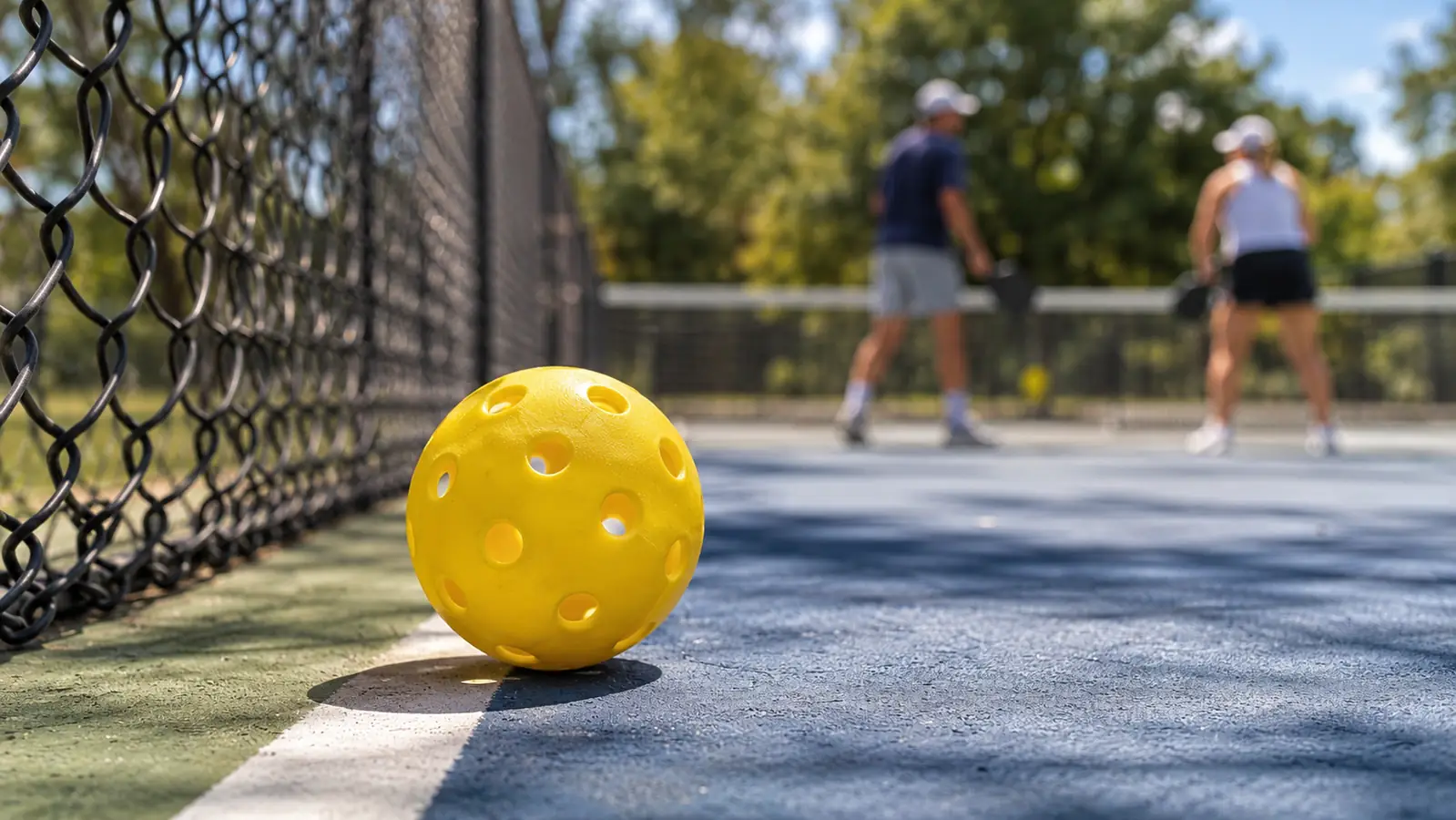
Every ball listing in the world would love to tell you a game count. Nobody can. Too much depends on temperature, the surface, how hard you hit, whether your partner sends one into the fence every third point, and how long the ball sat in a hot car before you ever opened the pack. Anybody offering an exact number of games is either guessing or selling. What I can offer instead is the check I run before every session.
Squeeze it. Drop it at eye level and watch the return. Turn it and look for the hairline. If two of those three feel wrong, retire it to the practice bucket and pull a fresh one. A ball that fails the check still flies well enough to fool you during a warmup rally, and then it knuckles on the one point of the morning you actually cared about. I learned that the annoying way, at 9 in the morning, on game point, with a partner who still brings it up.
The Replacement Rhythm
Here is the practical truth about the X-40 that I wish somebody had told me in March. You will not buy one pack and be done. You will buy a pack, work through it over a couple of months, then buy another. That is not a knock on Franklin Sports. It is what an outdoor hard plastic ball does. Every brand's outdoor ball cracks eventually. The only real question is how gracefully, and whether it warns you.
Because I play three mornings a week and share balls with Phil and whoever else is on the court, my rhythm has settled at roughly a three pack every six to eight weeks in warm weather and faster once the mornings turn. If you play once a week, cut that in half. If you play indoors most of the time, you will barely touch them.
I keep the retired ones in a mesh pocket of the bag for warmups and for the ball machine the rec center drags out on Saturdays. A cracked ball is still useful for practice. It is just not useful for a game you care about, and the older I get the less interested I am in pretending otherwise.
What I Liked
- Flight is flat and true, including in a crosswind
- Firm, quick response that suits serves and drives
- One-piece molded shell with no stitched seam to split
- USA Pickleball approved and used at the US Open Pickleball Championships
- Balls inside a pack feel alike out of the package
- A three pack means a spare in the bag without thinking about it
Where It Falls Short
- Cracks rather than going soft, so failure is sudden
- Cold mornings shorten the life noticeably
- Firm feel is unforgiving if your elbow is already grumpy
- No honest way to predict how long a pack will last
- Balls within one pack can age at different rates
- Fence marks turn into weak spots in the shell
Alternatives I Weighed
I did spend a couple of weeks playing a Dura Fast 40 side by side with the X-40, mostly out of curiosity about whether I was missing something, and I came away thinking both are legitimate outdoor balls that suit slightly different players. I also considered just playing with whatever the rec center puts out in the bucket, and that experiment lasted exactly one morning. A worn ball nobody tracks is how you end up losing a point to a shot you should have returned.
I stayed with the Franklin Sports ball because the flight and the feel suit how I play, and because a three pack is an easy thing to grab without thinking it over. That is not brand loyalty. That is a settled habit, and at my age I try not to disturb the ones that are working.
Who This Is For
You play outdoors a few times a week, you want a ball that flies true and rewards a firm drive, and you are willing to actually look at the shell now and then. You are probably a rec player like me who does not need the most forgiving ball on the market, just one that behaves the same way twice. If that is you, the X-40 is a sensible default, and it is what I hand a newcomer when they ask what to buy.
Who Should Skip It
Skip it if you mostly play in cold weather, because you will be buying packs faster than you like. Skip it if your elbow or shoulder is already sore, because a firm ball is not the one to build around, and a softer ball will do you fewer favors for the same effort. Skip it if you want a ball that warns you before it dies, because this one does not. And skip it if you are hoping a ball will fix your touch game. It will not. Nothing in a pack does.
If your bag is down to one good ball, this is the pack I keep restocking
USA Pickleball approved, 40 drilled holes, a one-piece molded shell, three to a pack. Mine have been in the bag since late March through every kind of morning Knoxville can produce. Check the current options and today's price, and order a spare pack before the cold gets here.
Amazon See Current Options on Amazon →